DRUMATH
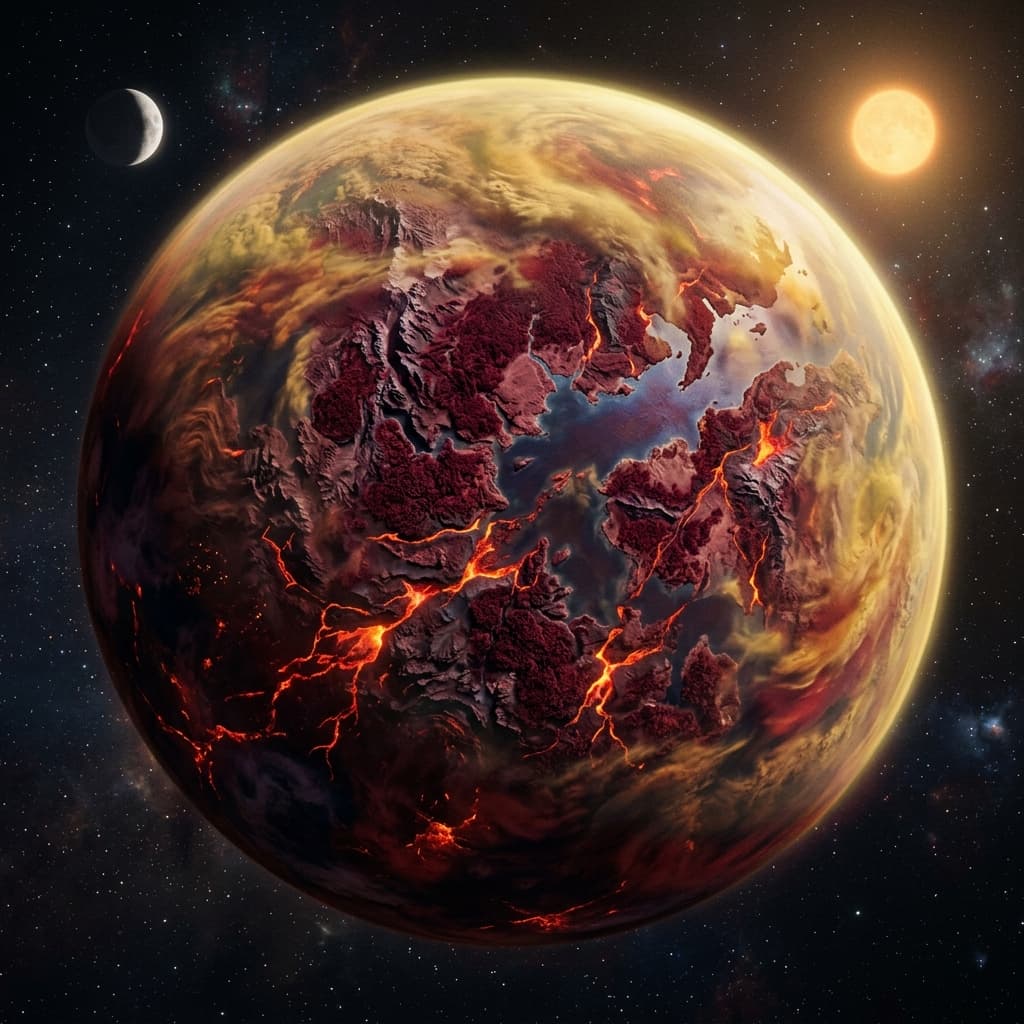
Drumath is the homeworld of the Druven, a spacefaring arthropod civilization native to its subterranean cave systems. It is the second planet of the Voravel system, orbiting a G-type main sequence star at approximately 1.2 AU, well within the habitable zone. The world is geologically young and volcanically active — a fractured continental body with inland seas, volcanic archipelagos, and an extensive network of lava tubes and quartz cavern systems that served as the evolutionary and civilizational cradle of the Druven species.
The subterranean biosphere of Drumath is as ecologically productive as its surface. Most inhabited worlds in the AXIOM survey record are defined by surface ecologies. Drumath is defined equally by what lies below — cave systems rich in quartz formations, geothermally warmed by a young and active geological interior, supporting a full food chain from piezoelectric mat organisms through grazers and intermediate predators to the apex arthropod intelligence that eventually built cities in the stone and launched mass drivers from the volcanic ridges above.
At 2950 CE the planet supports a significant Druven population distributed between ancient subterranean settlements and technologically enabled surface habitation. No permanent alien presence exists on Drumath. The surface and atmosphere are accessible to visiting species only with appropriate environmental equipment and explicit confederation authorization.
"The Druven did not emerge from their caves to escape a hostile underground world. They emerged because they ran out of questions it could answer."
Life on Drumath evolved along two largely separate but interconnected tracks: a subterranean biosphere anchored by geothermal and piezoelectric energy, and a surface biosphere anchored by photosynthesis under Voravel's filtered light.
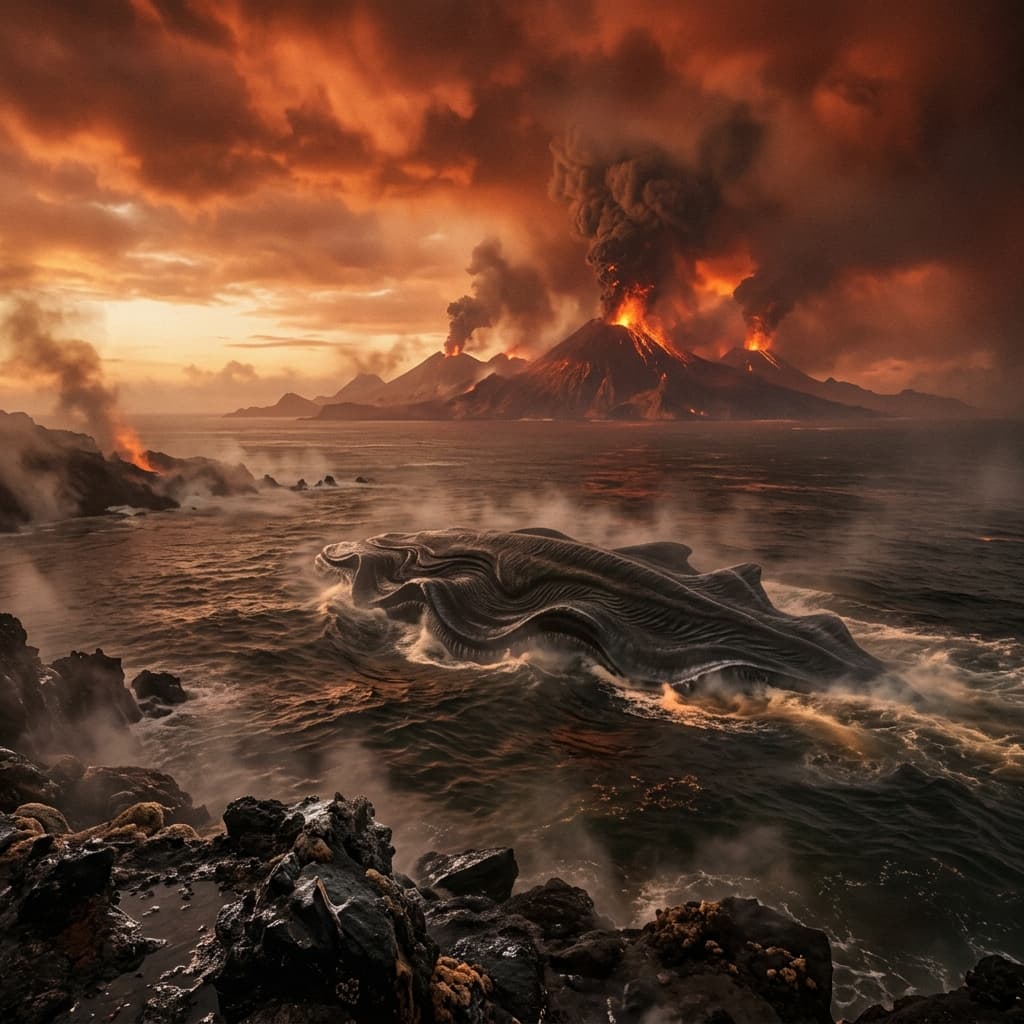
The surface biosphere is dense and competitive, fed by volcanic soil of exceptional nutrient content and driven by Voravel's energy input through a filtered, hazy atmosphere. Surface vegetation absorbs across a broad spectral range to maximize energy capture through the atmospheric diffusion layer; the dominant pigmentation is dark red to deep purple, giving the vegetated continental surfaces a wine-dark character visible from orbit.
Drumath's atmosphere is thick and chemically aggressive. Elevated CO2, sulfur dioxide, and hydrogen sulfide are byproducts of the planet's ongoing volcanic activity; atmospheric pressure runs approximately 1.4–1.6 standard atmospheres. Oxygen is present but below the level most contacted species require unassisted.
Thick atmospheric pressure (1.4-1.6 atm) and sulfurous/CO2 components demand full environmental protection for visiting Terrans.
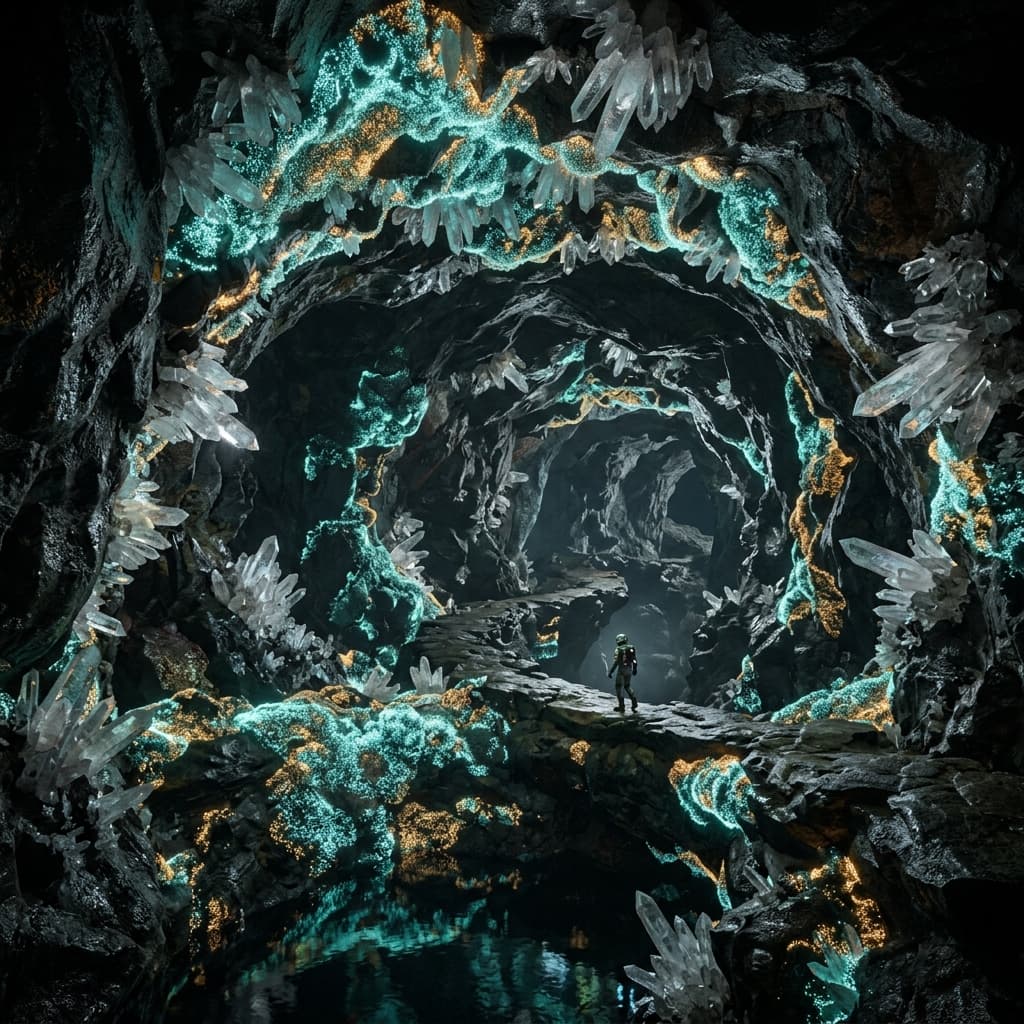
The subterranean biosphere is richer than most cave ecologies in the survey record because the energy input is richer. Geothermal activity provides consistent heat and chemical energy. Quartz cavern systems under tidal stress from the moon Umrath produce piezoelectric discharge on a regular cycle, providing a second energy source that the primary producers have incorporated into their metabolism.
Underground, chemosynthetic vegetation fills the ecological role that photosynthetic plants occupy on the surface. Norum — the dominant primary producer of the subterranean system — forms extensive mat colonies on quartz-rich cave surfaces, metabolizing both geothermal chemistry and piezoelectric discharge. Norum colonies bloom and contract on the 20-day Umrath tidal cycle, driving population pulses through the entire underground food chain.
Vibrational sensor advisory required. The environment is geologically active and sonically deceptive.
The Druven did not build their civilization on the surface of their world. They built it in the geology beneath it, in the quartz cave systems and lava tube networks of Drumath's interior, and the physical and cultural character of that origin persists at 2950 CE. The oldest Druven cities are underground. The most sacred sites are underground. The oldest surviving art — passages etched with intricate patterns experienced by Druven through nodule contact as they move through them, some thousands of years old — is underground.
Subterranean architecture does not translate to surface architectural vocabulary. Druven underground structures spread laterally rather than rising vertically — the geology above is the ceiling, the geology below is the floor. Internal surfaces are designed for vibrational properties: some chambers engineered to dampen and isolate, others to amplify and distribute.
Surface habitation became viable through technological development rather than biological adaptation. The Druven breathe Drumath's atmosphere natively; the surface was never physiologically inaccessible. What required development was the sensory infrastructure to navigate it. The surface is vibrationally chaotic compared to the structured geology of tunnel systems.
The mass driver launch systems that loft uncrewed payloads to orbit are built along the most geologically stable surface ridges — long volcanic formations providing the straight geometry that electromagnetic launch requires. Space elevators serve the crewed launch function, multiple tether systems terminating in orbital stations that are the primary interface between the confederation's surface civilization and space.