File Context
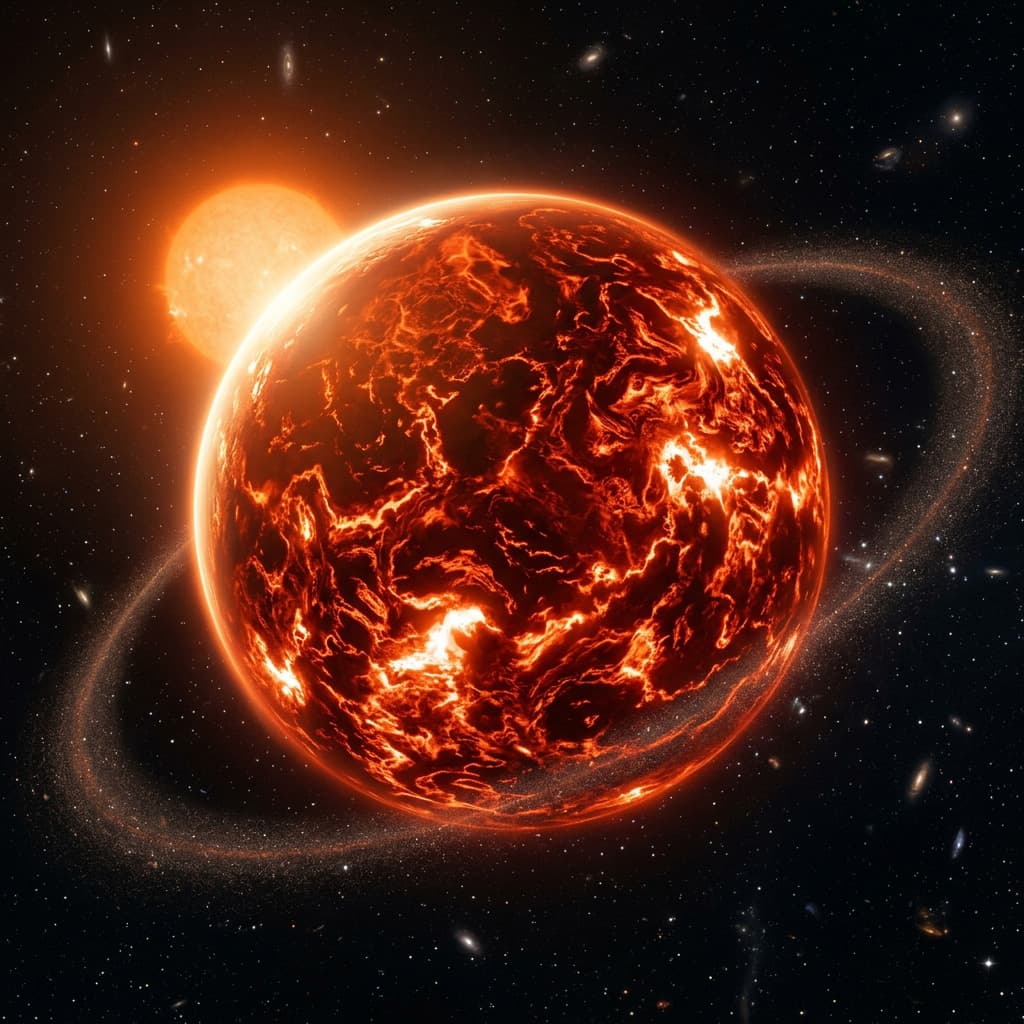
Ferrion-9b represents one of the most valuable, hazardous, and ethically fraught resource extraction sites in Terran space. It is a massive super-Earth whose entire surface consists of a convecting ocean of superheated, molten metal.
Through a combination of extreme tidal heating, massive gravity, and unique formation mechanics, Ferrion-9b produces naturally occurring ultra-dense alloys that are currently impossible to synthesize efficiently through conventional industrial processes. These alloys are strategically critical for the construction of advanced IM-9 (Isihara-Mendez) containment technology, advanced military armor, and deep-space infrastructure.
However, the planet embodies the central tension of the Threshold Science Doctrine: advanced capability demands corresponding wisdom. Project Anvil, the Commonwealth's extraction initiative, has demonstrated both the extraordinary value of the resource and the severe physical and ethical risks of harvesting it. Evidence suggests that large-scale extraction activities may have begun to trigger mild instability cycles in the host star.
Ferrion-9b is simultaneously a strategic asset, an environmental risk, a scientific wonder, a moral test, and a potential flashpoint for disaster.
Stellar Environment
The host star, Ferrion Primary (K-Type Orange Dwarf), is approximately 75% the mass of Sol but significantly more active. The close orbit (sub-Mercury equivalent) results in Ferrion-9b being bathed in intense stellar radiation and being tidally locked to the star.
The interaction between the star's immense magnetic field and the planet's massive, conductive metallic oceans creates complex, terrifyingly powerful electromagnetic phenomena within the system, including localized plasma storms and intense magnetic reconnection events.
Planetary Characteristics
Ferrion-9b's density implies an incredibly large solid iron core surrounded by the immense liquid metal mantle/ocean. The planet generates a magnetic field estimated to be 60 times stronger than Jupiter's.
There is no crust in the conventional sense. The "surface" is the top layer of the molten ocean. The atmosphere is negligible in pressure but composed almost entirely of vaporized metallic elements.
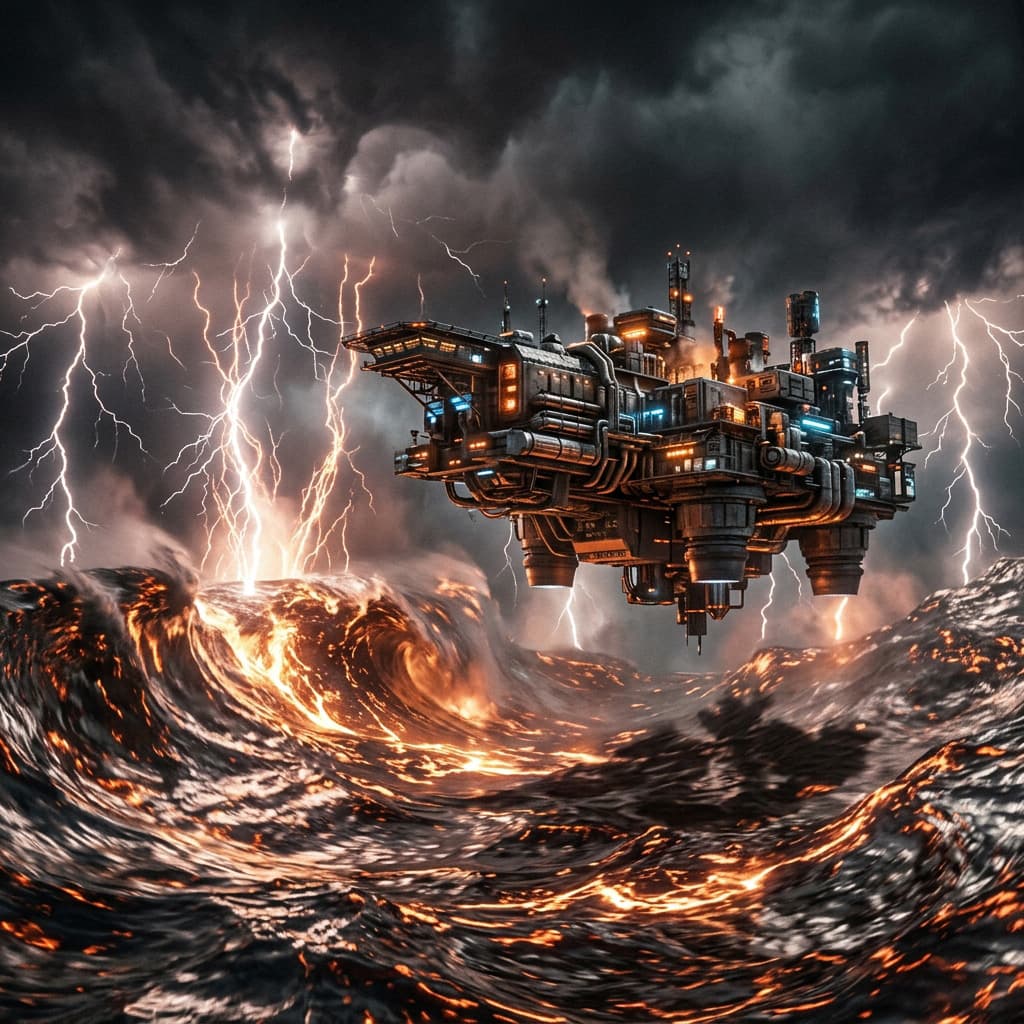
A SEA OF LIQUID IRON
Tidal waves reaching 2.8 km in height.
Ocean Composition & Dynamics
The planetary surface is a global liquid metal ocean varying in depth from an estimated 800 to 1,200 kilometers before reaching the solid inner core. The composition is dominated by Iron (81.3%), Nickel (14.2%), Cobalt (2.1%), Tungsten, and trace amounts of exotic, naturally synthesized ultra-heavy isotopes.
Temperature at the surface ranges from 1,800°C on the nightside to over 3,500°C at the sub-stellar point. Deep, complex convection cells constantly cycle material between the crushing depths and the surface, forging the highly valued alloys through pressure and heat.
Tidal Waves & GeysersIntense stellar tidal forces create tidal waves in the liquid metal that reach peak heights of 2.8 kilometers above mean surface level. The crashing of these metallic waves creates massive seismic and acoustic events. Furthermore, rapid release of pressure from deep convection cells produces metallic geyser activity, with superheated liquid jets reaching 15+ kilometers into the near-vacuum.
Project Anvil Operations
Project Anvil is the Commonwealth's highly classified initiative to harvest the ultra-dense alloys from Ferrion-9b. The operation is entirely automated at the planet level, directed from "Anvil Station Theta," a heavily shielded orbital command facility positioned at the L4 Lagrange point.
Extraction utilizes massive, shielded tether-rigs lowered from synchronous low-orbit platforms during the brief periods between major tidal crests. These rigs plunge specialized magnetic-containment scoops into the molten ocean, drawing up millions of tons of superheated material before rapidly winching back to orbit for cooling, separation, and refinement.
Operational Losses To Date
Primary failure modes include Magnetic Resonance Feedback (induced currents melting containment systems) and Metalquake Events (tsunamis exceeding predicted heights, severing tethers).
THE ETHICAL LIMIT OF EXTRACTION
Ferrion-9b exposes a critical flaw in current Commonwealth oversight logic. Recent astrophysical data indicates that the host star, Ferrion Primary, has entered a mild instability cycle. Deep analysis strongly suggests this instability is being triggered by the mass-removal from Ferrion-9b. Altering the mass of the planet is fundamentally changing the tidal interaction between the planet and the star.
If extraction continues at the current accelerating pace, projections indicate the star could experience a catastrophic flair event or even partial destabilization within a century—potentially obliterating the entire system.
"The alloys save lives—improved IM-9 containment prevents catastrophic ship reactor failures. This is indisputable. The extraction endangers an entire star system—this is also indisputable. The Commonwealth walks the narrowest path: attempting to take exactly what we must to survive, and watching desperately for the moment we must stop."
— Excerpt, AXIOM Oversight Committee Briefing
This represents the ultimate test of the Threshold Science Doctrine. The Commonwealth possesses the technological power to unravel a star system for raw materials; the question is whether it possesses the institutional wisdom to halt before the threshold of irrecoverable disaster is crossed. The military demands more alloys. AXIOM recommends immediate cessation. The debate is ongoing.