I. EXECUTIVE SUMMARY
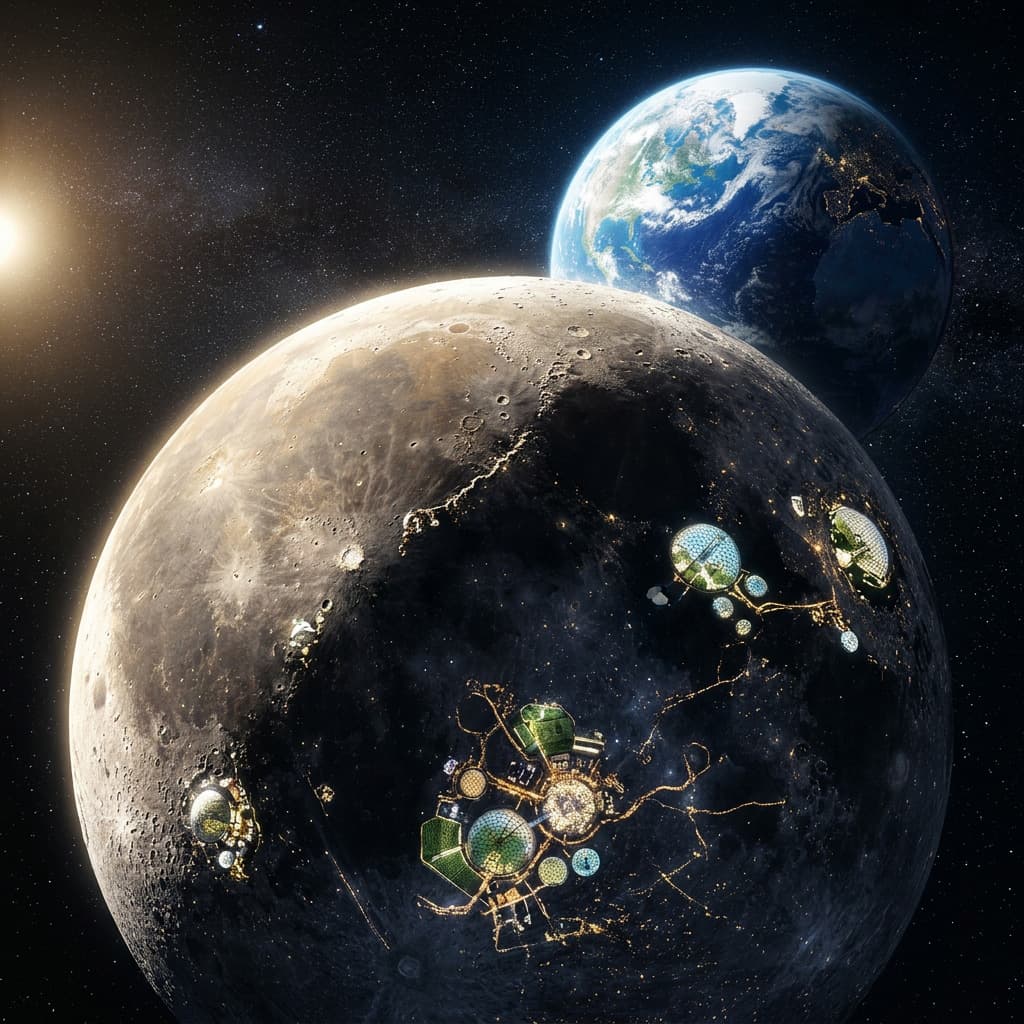
Luna serves as the administrative and regulatory capital of the United Terran Commonwealth. Earth’s only natural satellite houses the Commonwealth Senate, AXIOM Central Command, the Terran Science Oversight Council, and major academic and research institutions centralized outside Earth’s political sphere.
The moon’s stable geological environment, proximity to Earth, and psychological separation from the homeworld make it ideal for interstellar governance. A population of 4.8 billion inhabits subsurface cities, surface domes, and orbital facilities—making Luna one of the Commonwealth’s most densely populated worlds despite its airless, low-gravity nature.
Luna was not colonized for its resources or strategic location relative to other star systems. It was colonized because governing humanity from Earth was deemed impossible after the Expansion. The moon’s administrative primacy is as much political philosophy as practical logistics: a government distant enough from any homeworld to be perceived as belonging to all of humanity rather than any faction of it.
III. BIOSPHERE
Luna has no indigenous biosphere. Its surface environment is a hard vacuum — no atmosphere, no liquid water, extreme temperature cycling from +127°C in sunlight to −173°C in shadow. All food production occurs in sealed hydroponics facilities inside subsurface habitats. The biosphere is entirely artificial and human-maintained. Approximately 40% of food is produced on-moon; the remainder is imported from Earth and Mars.
Stellar Environment
Planetary Characteristics
Atmosphere & Habitability
Population Distribution
Geology & Terrain
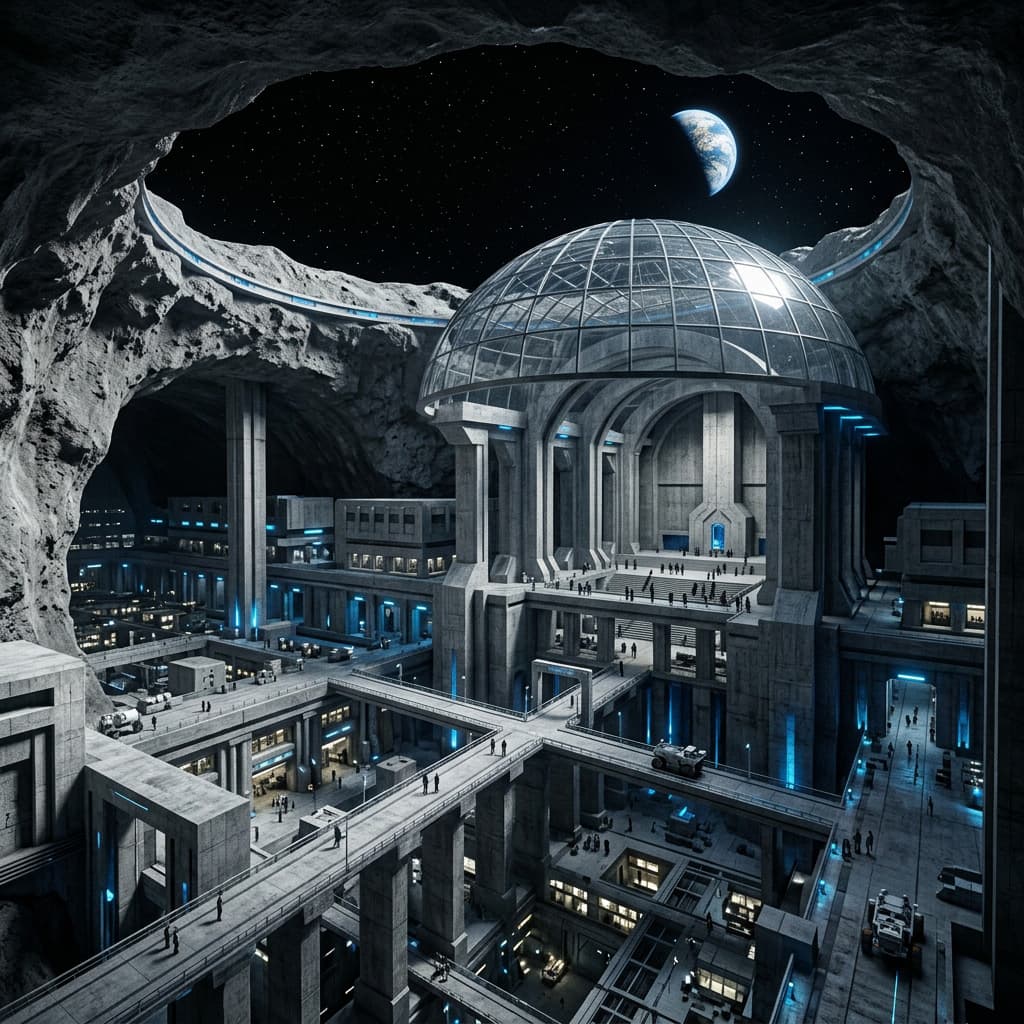
Luna’s surface spans varied terrain shaped by 4.5 billion years of impact cratering. Large basaltic plains called maria dominate the nearside. The subsurface beneath major cities has been mapped to considerable depth. Lava tubes have been incorporated into subsurface infrastructure, providing natural radiation shielding and thermal stability.

Major Population Centers
Seat of the Commonwealth Senate and primary administrative capital. Subsurface caverns beneath Tycho crater.
Secondary government offices and AXIOM administrative functions. Regional command hub.
Research and academic institutions including Luna Academy. Primary AXIOM research campus.
Historically honors humanity’s first permanent settlement. Cultural and memorial district.
Farside site housing AXIOM Central Command. Permanent memorial to Project Halo victims.
Observational astronomy shielded from Earth radio emissions. Deep space survey authority.
Military & Security
AXIOM Central Command operates from fortified facilities on the farside, shielded from Earth-based observation and electronic interference. Orbital defense platforms, early warning systems, and hardened command bunkers ensure continuity of government in crisis scenarios.
Luna’s strategic importance is maximum — it represents the single point of failure for Commonwealth governance. The world is simultaneously the most valuable and most vulnerable location in Terran space.
Known Risks
500–1,000 mSv/year surface dose without shielding. Time-limited surface activity mandatory.
Long-term 0.166g residence requires medical intervention and periodic rotation to higher-gravity environments.
Cannot achieve complete self-sufficiency. Dependent on Earth and Mars supply shipments.
Destruction or capture of Luna would effectively decapitate the Commonwealth at all levels simultaneously.
Colonization & Administration Timeline
First permanent crewed lunar base established at the south pole. 12 initial residents; water ice extraction begins.
Large-scale subsurface city construction initiated beneath Tycho crater. Engineering achievement of the era.
Catastrophic AI governance system failure at Kordahl Station. Memorial erected; AXIOM oversight protocols fundamentally restructured.
Commonwealth Senate formally relocates from Earth to Luna. Psychological separation of government from homeworld begins.
AXIOM Central Command moves to farside facility. Governance and defense separated across lunar geography.
4.8 billion inhabitants. Seat of Commonwealth Senate, AXIOM Command, and Terran Science Oversight Council.
Classification Summary
AXIOM Planetary Survey Division
Unrestricted — Public Domain