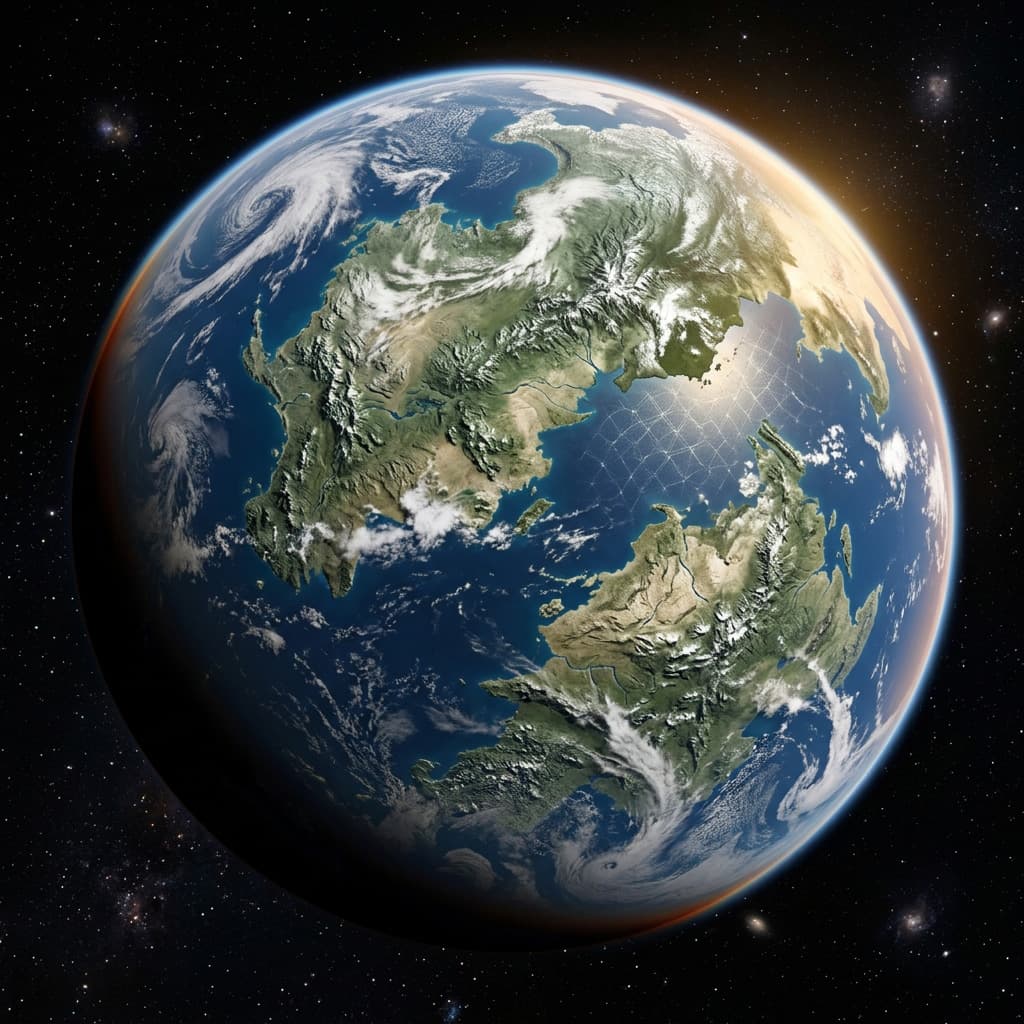
“Vaenoth Prime should not exist. Every physical parameter points toward a world teeming with organic life. Instead, it hosts a complete mechanical ecosystem operating in perfect cooperative silence for millions of years without a predator, a hierarchy, or a trace of the civilization that built them.”
The fossil record is clear. A complete organic biosphere flourished on Vaenoth Prime, went extinct without catastrophe markers, and was replaced by a mechanical ecosystem introduced fully-formed by an unknown precursor civilization. Those builders — designated the Lost Architects — left no cities, no writing, no artifacts beyond the functional systems themselves.
They built a planetary-scale living machine and then erased every trace of their existence. What remains is their work: self-sustaining, elegant, and completely indifferent to the civilizations that have spent centuries trying to understand it.
AXIOM has designated Vaenoth Prime UBW-1 — Unique Biosphere World, Class 1 — the highest protection tier available. The Pale Archives preserve the complete genetic history of the extinct organic biosphere. No equivalent world exists in the catalogued database.
Vast data vaults buried beneath continental shelves preserve the complete genetic history of the extinct organic biosphere alongside the mechanical design records of every construct type. The Archives were built with information science far exceeding current Commonwealth capability. The scientific value is incalculable. The purpose is unknown.
The host star is an unremarkable G-class main sequence star — a near-solar analog producing standard radiation output. UV levels are moderate, stellar activity shows no major events. The star's very ordinariness is itself relevant context: there is nothing in the stellar environment that would explain the extinction of the organic biosphere, and nothing that stresses the mechanical ecosystem that replaced it. Whatever happened here, the star was not responsible.
Standard nitrogen-oxygen: 78% N₂, 21% O₂. Pressure 1.0 atm. Temperature 15–25°C across temperate zones. Standard convective weather patterns. Researchers can breathe it without equipment. The planet is physically habitable in every sense.
This atmosphere is maintained in perfect breathable balance by the mechanical biosphere — photonic flora and underground material networks perform gas exchange through mechanisms not yet fully characterized, producing and consuming atmospheric gases with the same net effect as an organic biosphere. Without organic chemistry.
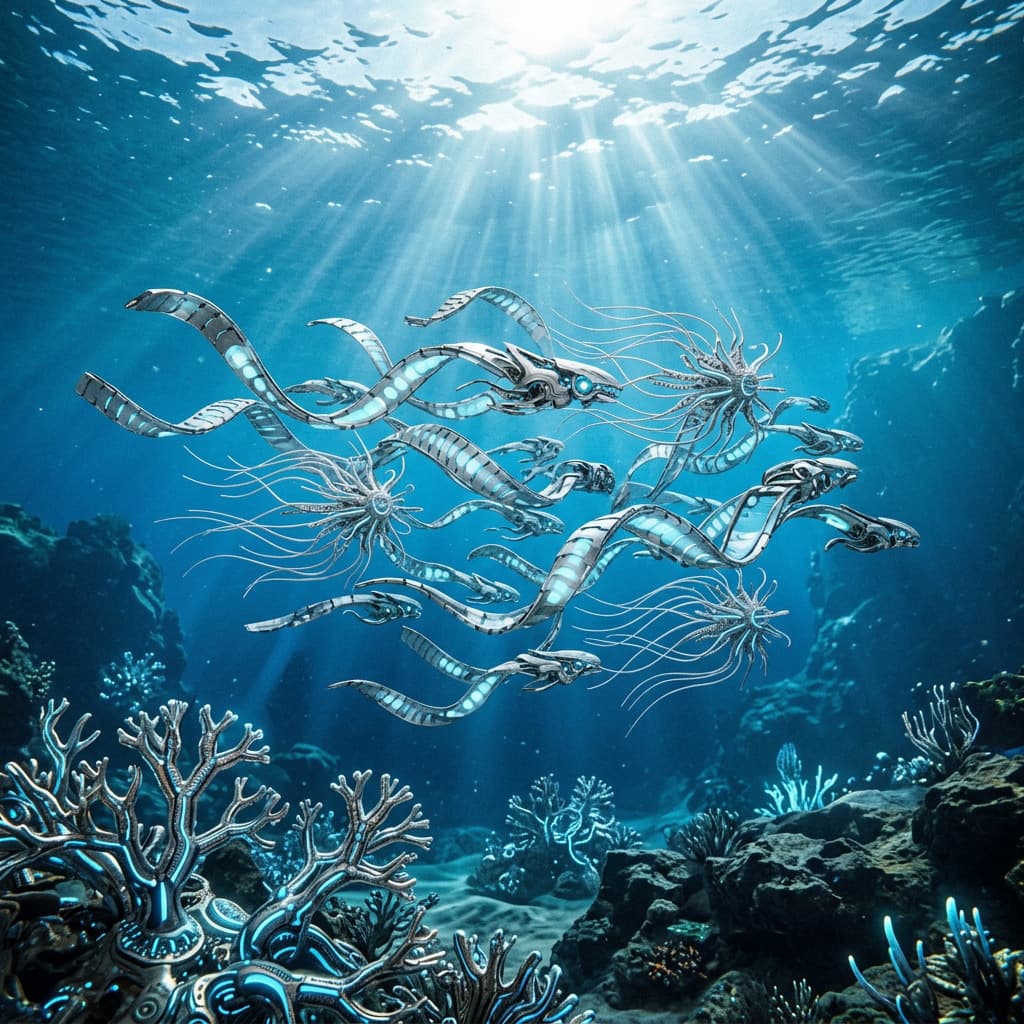
Vaenoth Prime has oceans, rivers, lakes, and precipitation cycles across all major biomes. Water is near-neutral pH, standard mineral content, and notably clear — the absence of organic decomposition means the water column lacks the turbidity of organic worlds. Aquatic constructs inhabit all major water bodies. Their coordinated movement produces a distinctive shimmering surface effect visible in clear conditions from several thousand kilometers altitude.
Plate tectonics are active. Terrain is varied and broadly Earth-like in character. Sedimentary strata are well-preserved — the geological record is the primary evidence base for understanding Vaenoth's history. The fossil sequence within those strata tells two stories separated by silence: a flourishing organic biosphere, an unexplained cessation, and then a fully-formed mechanical ecosystem appearing in the record without transition.
A complete organic biosphere: vertebrates, arthropods, marine organisms, plant analogues, microbial communities. Hundreds of millions of years of biological evolution. The record is intact, coherent, and scientifically unremarkable in its trajectory. Vaenoth had life — complex, diverse, real.
No mass extinction marker. No impact layer. No volcanic event. No radiation spike. No pathogen evidence. Organic life simply ceases. After a period of unknown duration during which the geological record is sterile, a new record begins — mechanical. Fully formed. Functionally sophisticated. No transition fossils.
The implication is stark: organic life ended, the planet sat empty, and then someone introduced a complete mechanical biosphere as a replacement. Whether the extinction was natural or deliberate remains entirely unknown.
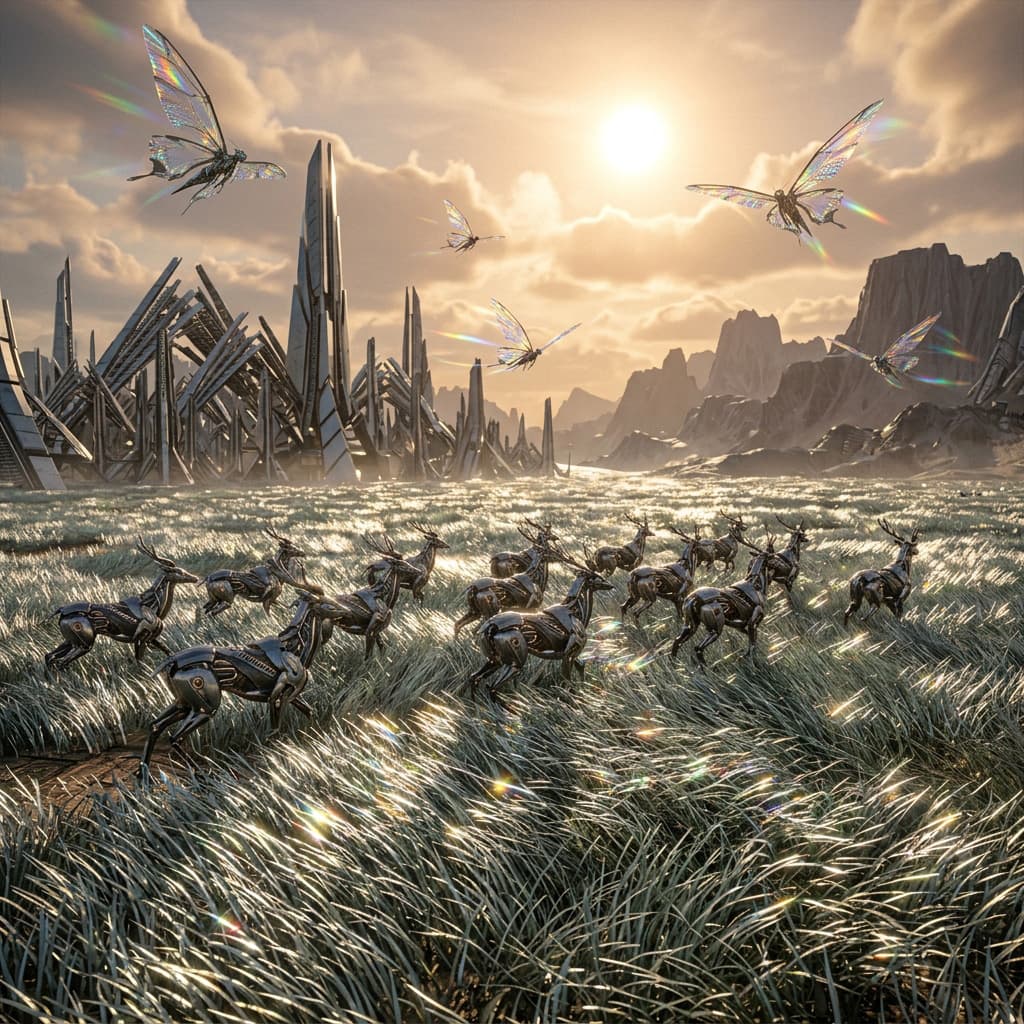
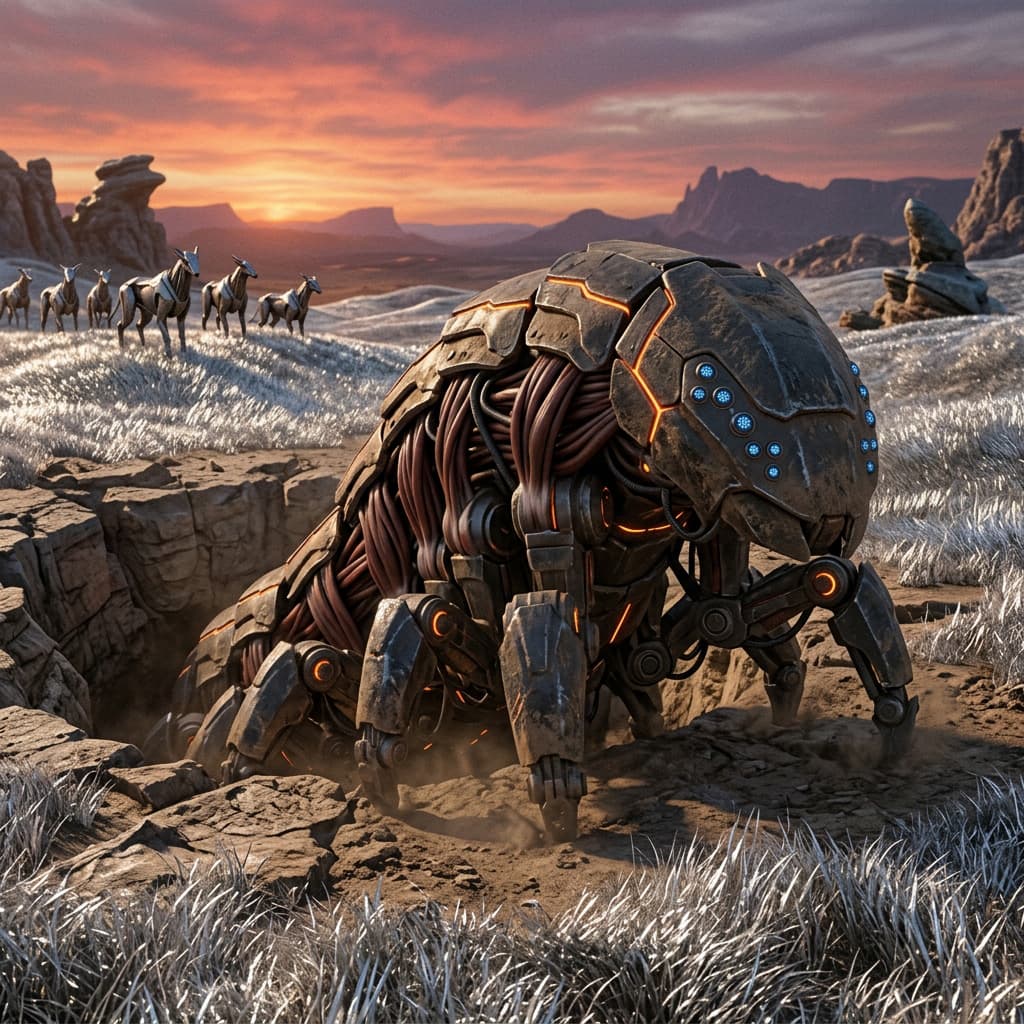
The dominant surface vegetation is silica-grass — metallic blades covering the plains in what appears from orbit as a silver-green expanse. Silica-grass bends and flexes without damage, stores thermal and electrical charge, and participates in the planetary energy redistribution system through mechanisms not yet fully understood. It does not photosynthesize. Energy exchange appears systemic — the vegetation participates in a planetary-scale flow rather than capturing sunlight for individual use.
“Beautiful and wrong in equal measure.”
Forest canopy structures of metallic and ceramic materials arranged in configurations that optimize light interaction. Every surface angled, every structure geometrically optimized. The wind moves through metallic grasslands with a sound unlike anything on organic worlds.
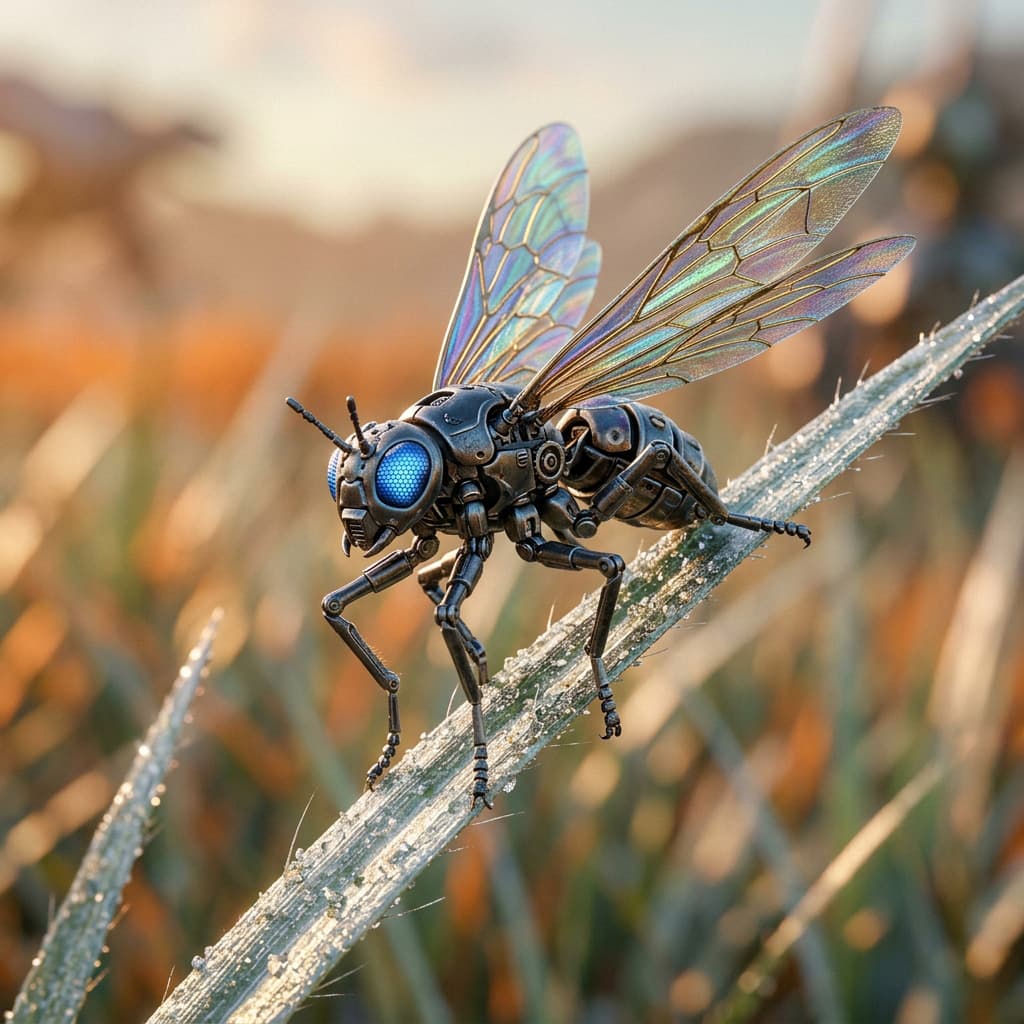
No organic pathogens — absent from this ecosystem. The hazard is the mechanical ecosystem's chemistry. The silvery nanofluid that serves as circulatory medium in Vaenothian constructs is partially characterized and should be treated as a contamination risk: unknown interaction profiles with organic tissue, potential for technological contamination if introduced to Terran systems.
Contact with Lithophage Crawler catalytic nanofluids is a specific hazard requiring protective equipment in proximity to active processing sites. Electromagnetic emissions from construct coordination activity are within documented safe ranges but may interfere with sensitive electronic equipment.
Every known ecosystem in catalogued space operates on competition. Vaenoth does not. The machine ecosystem's defining characteristic — more remarkable than its mechanical composition — is the complete absence of predation, competition, aggression, or territorial behavior of any kind. Energy and materials flow through the system by redistribution rather than consumption. No construct kills another. No construct claims territory. The ecosystem operates as a cooperative network at planetary scale, and has done so for millions of years.
Store charge through light interaction and systemic processes
Harvest stored charge via electromagnetic induction. Transport via migrations
Collect atmospheric energy. Dismantle ceased constructs for material recovery
Assemble new constructs from pattern keys. Fully formed on emergence
Process geological material. Feed refined elements into underground distribution networks
Vaenothian constructs do not reproduce biologically. They are assembled. Distributed fabrication chambers — integrated with the material distribution networks — compile construct designs from encrypted templates called pattern keys. A new construct emerges fully formed, calibrated, and integrated into the ecosystem within hours of emergence.
Pattern keys are the digital equivalent of genetic material. They are stored both in the fabrication chambers and in the Pale Archives — vast data vaults buried beneath continental shelves, constructed from mineral-based logic matrices optimized for maximum data density. The Archives preserve not only the current mechanical design library but the complete genetic archive of the extinct organic biosphere.
Excavation of Forge-Theta — an inactive, partially damaged megastructure beneath Vaenoth's northern continent — recovered partial base algorithms relating to machine gestation protocols and adaptive refinement processes.
The encryption key used to access this data self-destructed upon retrieval. Access to remaining encrypted systems is now permanently denied. The algorithms are under intensive study. No practical applications developed from partial data recovered.
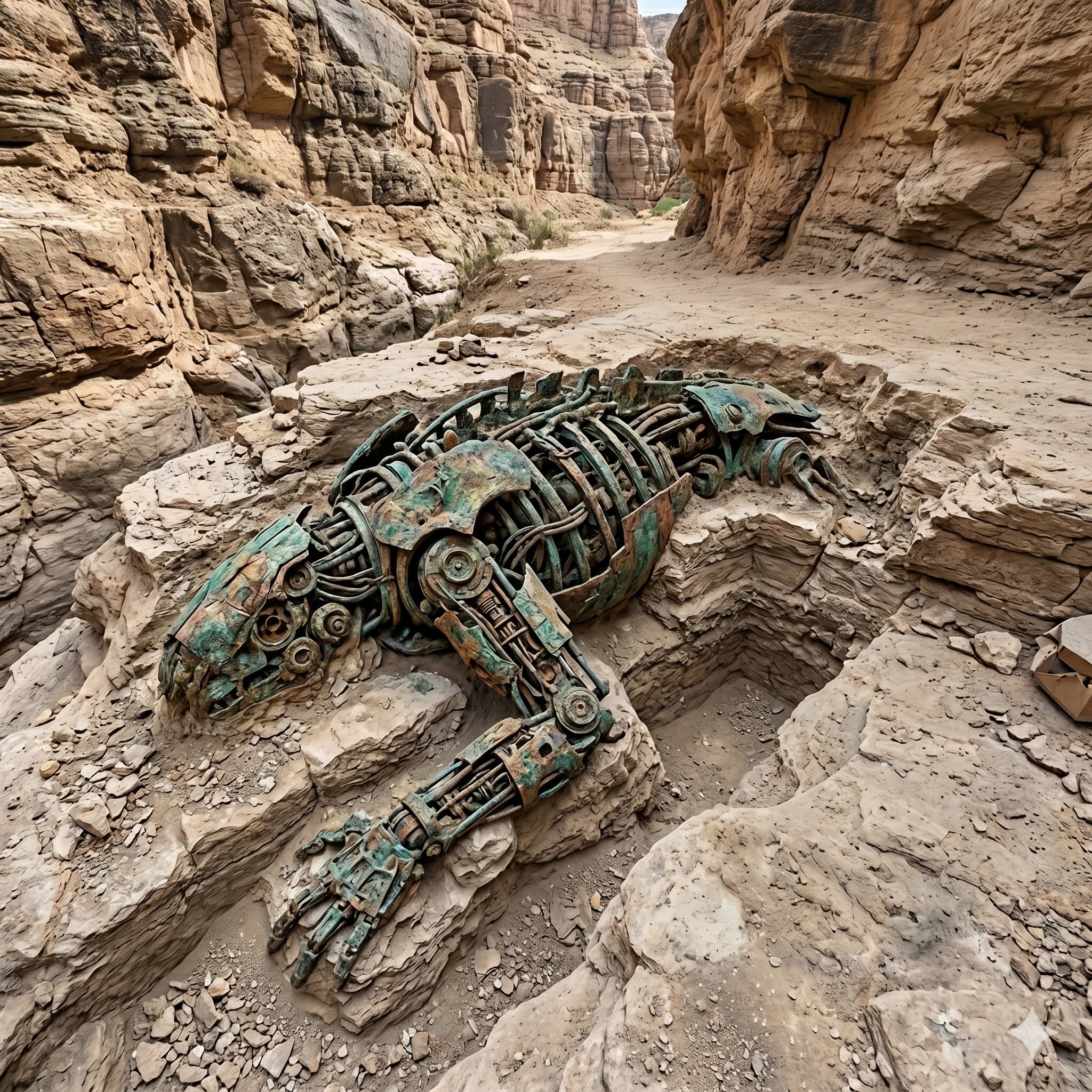
The forges are the most direct evidence of the Lost Architects' existence. They are megastructures — buried, geometrically precise, bearing unmistakable tool marks indicating organic construction. They were clearly built by someone. But the geological record around them is, in the words of one research director, “conspicuously clean where culture should be.” No cities. No habitations. No cultural artifacts. No writing. No symbolic representation of any kind beyond the functional infrastructure itself.
Organic biosphere died naturally. Lost Architects found a sterile planet and introduced the mechanical ecosystem as an act of preservation.
The Lost Architects were the organic civilization. They built their mechanical replacement and then departed, died out, or transformed.
The extinction may have been deliberate. The mechanical ecosystem is the product of a philosophical choice AXIOM is not yet equipped to evaluate.
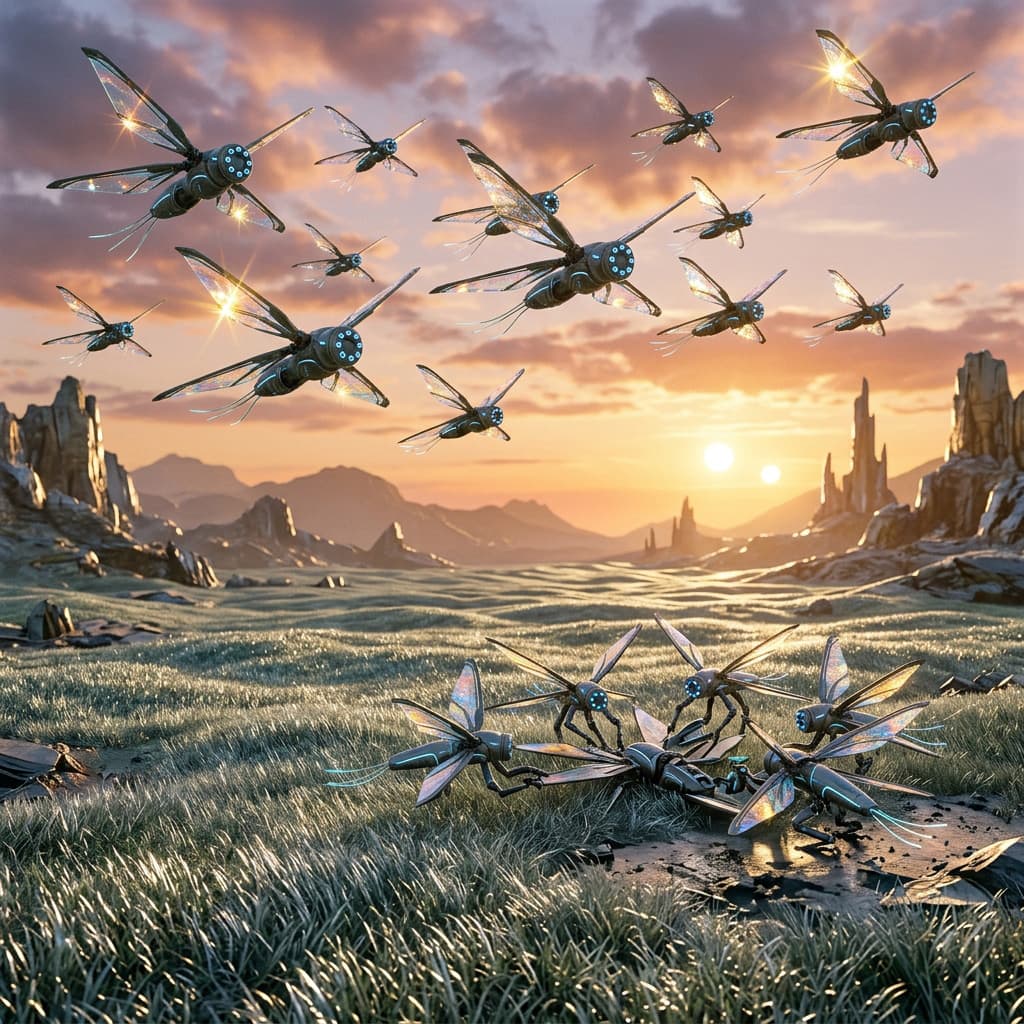
Researchers spend months on Vaenoth and receive, in return, nothing. Not hostility. Not curiosity. Not acknowledgment. The ecosystem recognizes external presences as obstacles and routes around them with the same precision it applies to terrain features. Ferravore Strider herds split around expedition camps. Glasswing formations redirect without breaking formation geometry. Aquatic constructs flow around researchers with the same fluid efficiency they apply to underwater geology.
No construct has ever approached a researcher to investigate. No construct has ever responded to communication attempts — mathematical broadcasts, linguistic broadcasts, Pelari biosong, physical signals. No construct has modified its behavior in response to damage inflicted on others of its type.
"Being politely ignored by something vastly more interested in its own business than in them."
AXIOM's assessment is that the indifference is encoded by design — the Lost Architects built a system with no external communication protocols because external communication was not part of what the system needed to do.
The ecosystem does not degrade, does not threaten, and does not require management. The risks are: unauthorized access by actors who do not accept the protection framework; institutional pressure to extract Archive materials or construct specimens; and long-term erosion of protection enforcement as political coalitions change over time.
Everything built on Vaenoth reflects a coherent design philosophy — cooperation over competition, function over monument, continuity over remembrance. The forges bear tool marks suggesting organic construction. But there is no name, no symbol, no biography, no claim. Whether this represents a philosophical ideal — humility taken to its logical conclusion — or a practical necessity AXIOM cannot yet identify, is the central question of Vaenoth studies.
Mass extinctions leave marks. Vaenoth's organic biosphere cessation left none. Life stops appearing in the strata and that is all. Three alarming scenarios: an extinction mechanism with no geological footprint; deliberate removal of the evidence; or a process so gradual that no discrete event is detectable. Current data cannot distinguish between these scenarios.
The machine ecosystem has operated without predation or competition for millions of years. This could be a deliberate architectural choice — a philosophical statement. It could be emergent from a closed-loop economy in which competition is non-optimal. A third possibility — that cooperative systems outperform competitive ones at sufficient complexity — would have implications far beyond Vaenoth if demonstrated.
“They built a world and signed no name. This is either the greatest humility or the greatest confidence ever demonstrated. Perhaps it is both.”
Crystalline and ceramic construction. Geometric architecture optimized for data density. No interfaces, no inscriptions, no operational controls. Most valuable data repository in the catalogued database and the most inaccessible.
Inactive, partially damaged megastructure. Tool marks indicate organic construction. Source of recovered partial algorithms. Key self-destruction incident occurred here. Further excavation ongoing under strict archaeological protocols.
The primary terrestrial biome covering most of Vaenoth's lowland zones. The sight of Ferravore Strider herds moving across the silver-green plains in coordinated silence is consistently described as one of the most affecting experiences available to a researcher in known space.
Multiple AXIOM research stations in continuous operation in high orbit. Primary interface point for expeditions and the primary observation platform for long-term ecosystem monitoring. Tri-species access with standing authorization.