CHORUS LOCUS
Executive Summary
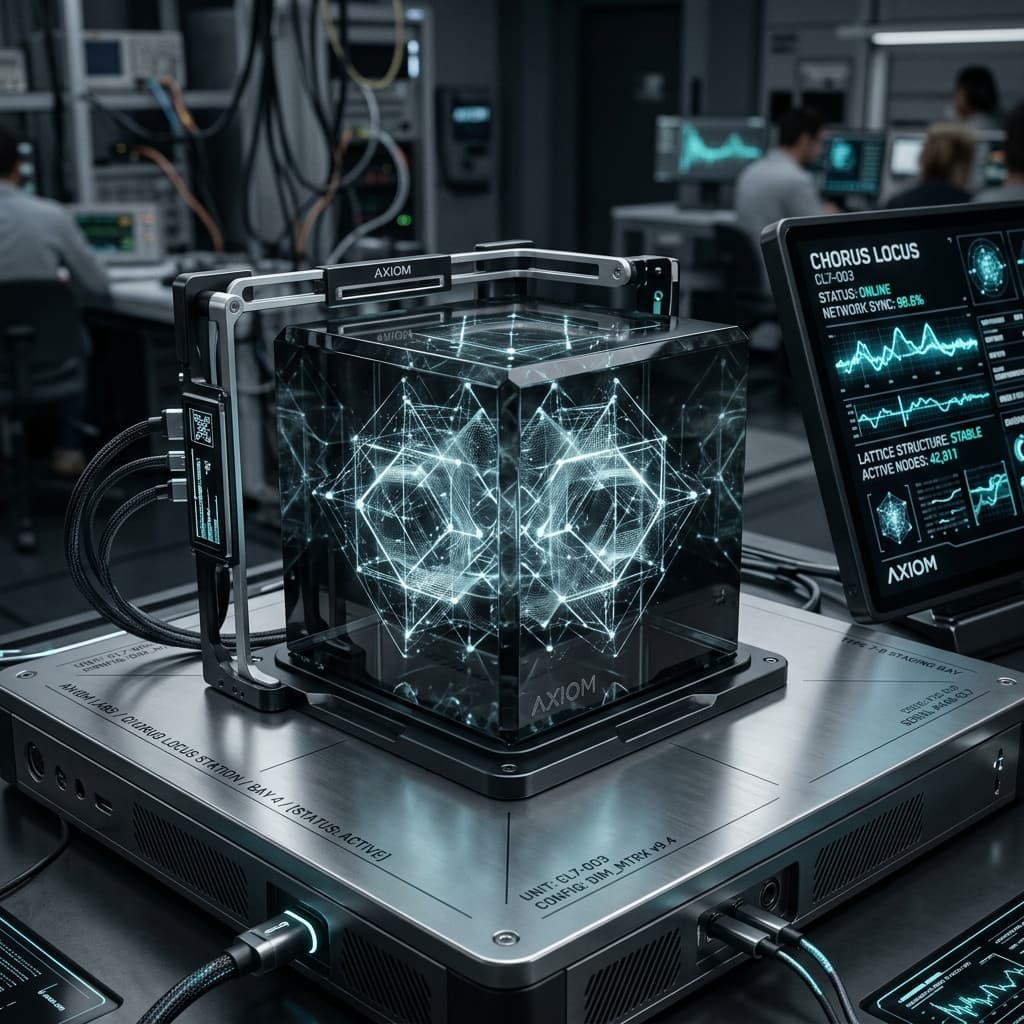
A Chorus Locus is a Chorus construct that stores information and releases it to recipients the Chorus intended to reach. Unlike the beacon, which exists for the Chorus to approach, the Locus exists for the Chorus to leave. It operates without Chorus presence, without ongoing Chorus monitoring, and without any mechanism for the Chorus to recover it. What is placed inside is placed permanently.
Loci are distributed more freely than beacons. Institutions engaged in joint research with the Chorus, governments receiving Chorus counsel, and individuals in sustained advisory relationships may be given one. The information a given Locus contains is always specific to the recipient and the Chorus's purpose in the exchange — scientific data, observational records, cultural philosophy, or accounts of other species, at whatever depth the Chorus judged appropriate.
Loci may also be embedded into planetary systems or fixed installations placed for recipient species beyond Terrans and Pelari. The Chorus have been distributing knowledge for nearly a million years; the civilizations they worked with across that span are not all still present. Some Loci exist whose intended recipients are extinct — embedded into systems where those species once lived, still holding what the Chorus placed, still evaluating intent against a recipient that is no longer there to satisfy it.
The security architecture embedded in every Locus allows this open distribution without risk. Data cannot be extracted by any means available to Terran or Pelari science. The architecture operates on physical and dimensional principles that have no foundational framework in either civilization's physics or mathematics. The Chorus do not retrieve Loci when they are lost, fall into unintended hands, or outlast their recipients. The security makes these scenarios equivalent, from the Chorus's perspective, to intended use.
Physical Description
The physical anomalies documented in ChorusBeacon-ART-001 apply here without material difference. The Locus exists across multiple matter states and through a number of spatial dimensions beyond what Terran instruments enumerate. The casing defines the three-dimensional cross-section; the structure it encloses extends beyond it. Measurement inconsistencies are characteristic rather than instrumental.
In dormant or idle states, the Locus produces the same subtle instrument disturbances recorded near the beacon: gravitational drift, coherent quantum noise, minor phase distortions. These effects are confined to the immediate vicinity and present no hazard to personnel or equipment.
The Locus's internal activity differentiates it from the beacon in one physically significant way: it responds to external stimuli. Approach, physical contact, and query attempts all produce measurable changes in the internal pattern configuration. Whether the Locus is processing the stimulus, recording it, or doing something for which no Terran analytical category applies has not been established. The response is consistent and repeatable. Its meaning is not.
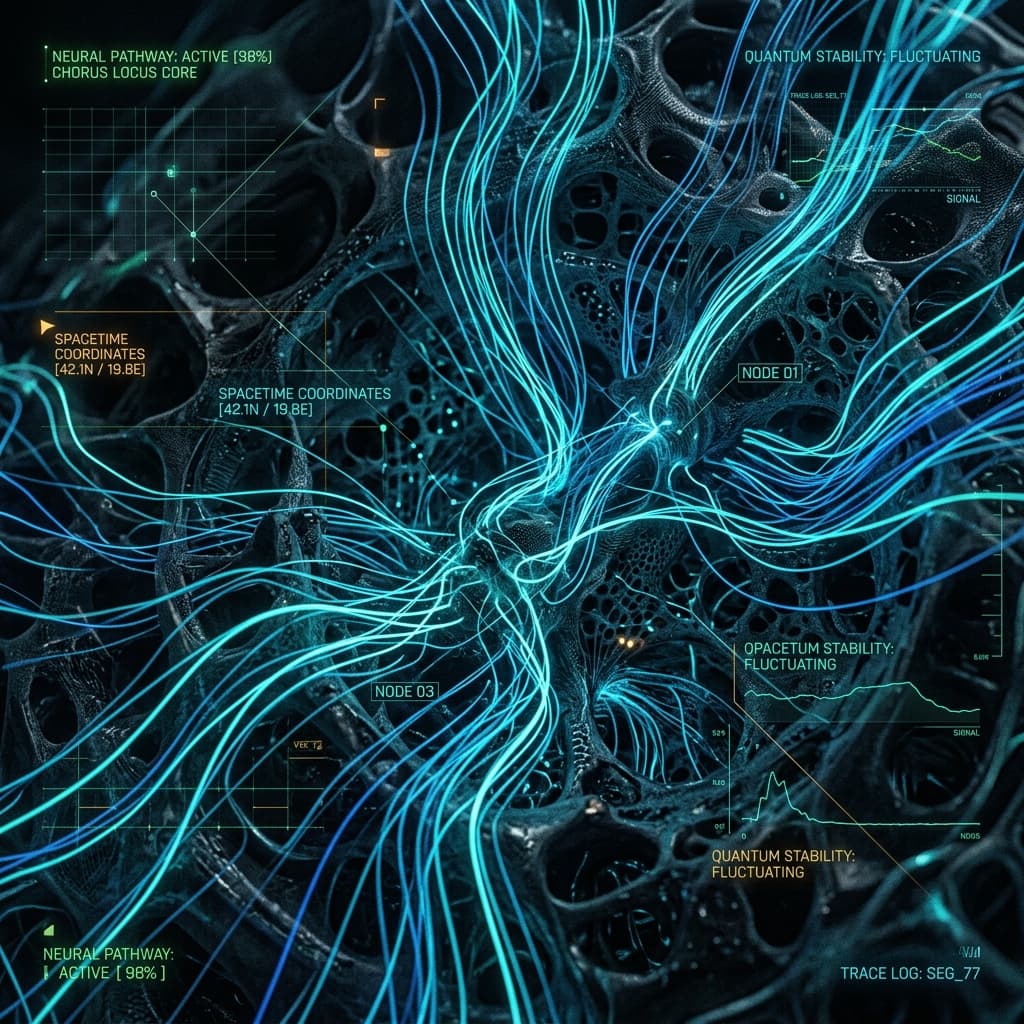
Fig. 1: Macro scan showing internal luminous filament network and phase junctions.
Discovery & Awareness
Pelari Awareness (~2500 CE)
Pelari institutions have held Loci since early Chorus contact, preceding formal Tri-Species engagement by approximately three centuries. Pelari records indicate loci were given during early philosophical exchange rather than at a single formal occasion. The total number held by Pelari institutions is not shared with AXIOM under current inter-species data agreements.
Terran Awareness (~2820 CE)
The first Terran-held Locus was placed at or shortly after the establishment of the Tri-Species Compact in 2820 CE. AXIOM's formal study program dates from the same period. Loci have since been placed with additional Terran research institutions and government bodies during sustained collaborative engagements. Each placement has been Chorus-initiated; no Terran institution has acquired a Locus by other means.
Function & Interface
Data Curation
Each Locus contains information the Chorus selected and organized for a specific recipient at the time of manifestation. The selection is not a data dump; it is a curated delivery. The Chorus determine what the recipient needs, what they intend the recipient to have, and at what depth and complexity the information should be presented. A Locus may contain highly technical scientific data, broad observational records spanning centuries, species encounter accounts, cultural philosophy, or any combination. Mundane and extraordinarily detailed information may coexist in the same construct.
The information does not exist in binary, sequential, or static form. It is distributed across simultaneous phase configurations — varying states whose relationships encode the data. The total volume of information a Locus can hold has no confirmed upper limit; AXIOM has not identified a Locus that has been exhausted by query.
Content cannot be updated, supplemented, or recalled after placement. What is placed at manifestation is the complete record.
Output & Calibration
When the Locus releases data in response to a successful query, it generates output in a form compatible with whatever technology is connected to it. The calibration is autonomous: the Locus analyzes the connected system and produces output that system can receive and process, without requiring a dedicated interface or prior adaptation. This is the same calibration principle underlying Chorus communication — applied here to hardware rather than consciousness.
What arrives in the receiving system is a translated representation of the stored information, not the information in its native form. Whether the translation is complete — whether what is received fully captures what the Locus holds — is unknown. AXIOM researchers who have received translated data describe it as coherent and detailed, while noting they cannot verify fidelity to source material they cannot directly observe.
The output format adapts to the receiving system. Terran systems receive data in formats their architecture can process. Pelari biosystems receive it differently. The Locus determines the translation; the recipient does not configure it.
Query Interface
The Locus responds to queries directed at it. The nature of the direction is not technical; it is attentional. A researcher approaching a Locus with a specific question and the intent to receive an answer produces a response from the Locus that a researcher who handles it without directed intent does not. The distinction the Locus reads is not behavioral or credential-based. It reads purpose. Whether that query meets the conditions for data release is determined by the intent gate (see §VII.C).
Security Architecture
State Variation
The data is distributed across simultaneous phase configurations. Each configuration contributes meaning through its relationship to the others; no single configuration carries complete information. Instruments that capture the Locus's three-dimensional cross-section capture one fragment of a structure that extends through dimensional states those instruments cannot resolve.
Physical extraction of the Locus, duplication of its observable properties, or any approach that copies what instruments can measure produces a fragment with no intrinsic meaning. The fragment is not a partial copy; it has no recoverable relationship to the original, because the organizational structure exists in the dimensional states that were not captured.
Multi-Dimensional Encryption
The data's organizational structure operates across dimensional states that Terran and Pelari physics do not enumerate. Terran and Pelari cryptography rests on two principles: the algorithm is computationally difficult to reverse, or the key is unknown. Both assume the attacker operates in the same dimensional space as the encrypted content. The Locus's organizational architecture operates in dimensional space that Terran and Pelari science has no mathematical framework to describe.
An effective decryption approach would require a formal model of dimensional states that do not appear in Terran or Pelari physics; instruments capable of operating in those states; and methods for translating information back from states that have not been mapped. None of these prerequisites exist in either civilization's current science. AXIOM Physical Anomalies Division assessment confirms that the gap is foundational rather than technical: the issue is not insufficient computing power applied to a known problem, but the absence of any framework in which the problem can be formally stated.
No other known species has been found to possess foundational theory from which such a framework could be developed.
Intent Gating
The Locus releases data only to a party whose purpose it assesses as consistent with the Chorus's intent in placing it. The assessment is autonomous, near-instantaneous, and produces no observable output when it results in denial. The internal pattern configuration shifts; data transfer either occurs or it does not.
The mechanism evaluating intent is unknown. It is not credential-based, biometric, or responsive to prior knowledge. AXIOM personnel who have attempted to access Loci with full knowledge of their contents, Chorus communication methods, and the specific circumstances of placement have not found that knowledge to improve access outcomes. The gate reads purpose, and purpose is not a fact that can be known and deployed.
When a query is denied, nothing happens beyond the absence of data transfer. There is no alert, no signal, and no feedback to the querying party about why access was withheld. The gate does not communicate.
Access has never been successfully circumvented by any known means. AXIOM has no record of a Locus releasing data to a party the Chorus did not intend to receive it.
Theoretical Analysis
1. Embedded Narrow Cognition
Premise: The Locus contains a narrow expression of Chorus consciousness — sufficient to evaluate intent and execute the release decision, nothing more. This would make the Locus closer to a dormant Chorus form than to an artifact, and the intent gate an expression of the same awareness that underlies Chorus communication.
Evidence: The Chorus can perceive and calibrate to intent in live communication; embedding a version of that capability in a persistent construct is consistent with known Chorus capacity. The Locus's internal pattern activity — its responsiveness to approach and query — is consistent with the behavior of a narrow awareness rather than a passive mechanism.
Implication: The Locus is not an object in a complete sense. It is a fixed, quieted expression of Chorus presence, maintained at the edge of dormancy. Its evaluative function continues as long as it exists. Whether it can degrade, become confused, or lose calibration over time is unknown.
Risk: If this model is correct, events that disrupt Chorus phase coherence in a region could affect a Locus without any detectable physical change.
2. Resonance Pattern Matching
Premise: The intent gate is a resonance pattern embedded in the Locus at manifestation. The Locus was tuned to the resonance pattern of its intended recipient's purpose — their goals, their relationship to the Chorus, their reason for receiving the construct. A query from a party whose purpose-resonance matches the embedded pattern produces a release; a mismatch produces no response.
Evidence: Resonance matching is the mechanism underlying all Chorus calibration. Using it as a security architecture requires no capability beyond what the Chorus routinely exercise. The observation that intent cannot be faked is consistent with resonance patterns being physically distinct from conscious deception — a party intending one thing while claiming another would produce two patterns, neither of which matches the embedded one.
Implication: The gate is not evaluating ethics or morality; it is detecting resonance alignment. A party with genuinely aligned purpose gains access regardless of how they came to hold the Locus. A party whose purpose differs from the intended recipient's, even if their intent is benign by other measures, does not.
Risk: The original recipient's resonance pattern may not map onto successor institutions or individuals. Whether the gate can accommodate genuine transfer of purpose — a research team that inherits a Locus from a predecessor institution with the same research goals — is unknown.
3. Active Chorus Attention
Premise: The Locus maintains a persistent low-level connection to the Chorus, who retain passive awareness of access attempts and make the release decision themselves in real time.
Evidence: The Chorus's ability to monitor across interstellar distances is established; a Locus could provide a local anchor for that attention, similar to the function proposed for the beacon under the attention-anchor hypothesis. The quality of the intent assessment — its apparent inability to be deceived — would be more consistent with active Chorus judgment than with any embedded mechanism.
Implication: Locus access attempts are known to the Chorus. Every query that has been denied was a Chorus decision, not a mechanical one.
Risk: This model conflicts with the Chorus's stated approach to Loci — they do not retrieve them, do not respond to reports of loss, and have not intervened when Loci fall out of intended use. Active monitoring without any response behavior is possible but sits in tension with what is observed. AXIOM considers this the least probable of the three hypotheses.
Registry & Current Status
AXIOM Standing Protocol SSP-07
Chorus Loci are Chorus property held in trust by designated recipients. All Loci in possession of AXIOM-affiliated institutions, governments, or individuals are to be registered with the AXIOM Scientific Oversight Council.
AXIOM Holdings
Placement period: post-2820 CE; content classification: classified above this document's level. Informing AXIOM's ongoing assessment of Chorus capabilities and priorities.
UTC Parliament
Placement period: post-2820 CE; content classification: classified above this document's level. Contents have not been shared with AXIOM.
Alectryon Observatory
Placement period: post-2820 CE; content focus: phase physics and graviton field data. Extracted data includes Chorus-observed graviton field behavior across stellar configurations.
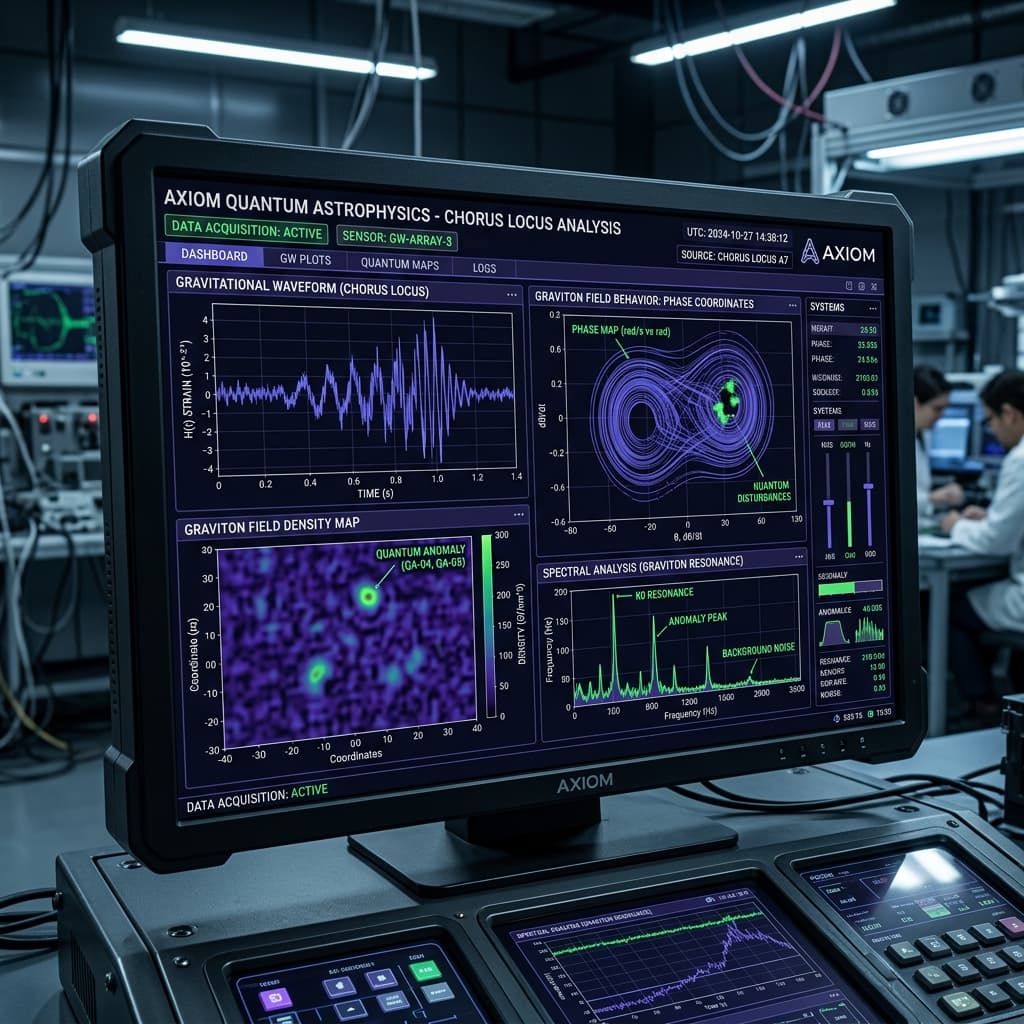
Fig. 2: Graviton field coordinates and IM-9 distribution plots.
Critical Unknowns
"We know what comes out. We have no idea what it actually is."
— Senior Researcher, AXIOM Physical Anomalies Division, field notes, 2931 CE
How much data does each Locus contain? No Locus known to AXIOM has stopped producing output. Whether there is a practical or theoretical limit is unknown.
Can the intent gate accommodate institutional succession? Whether the gate extends to successor institutions or new personnel is unconfirmed.
What does the intent gate do when the intended recipient no longer exists? Whether the gate holds indefinitely or decays over time remains unresolved.
Would AXIOM recognize an orphaned Locus if one were encountered in survey missions? Intact specimens may survive across massive timescales.
How many species did the Chorus share knowledge with before Terran or Pelari contact? The number of species that fell is unknown.
How many Loci exist? AXIOM holds partial records, Pelari records are not shared, and location-fixed Loci are unaccounted for.