TERRAN ADVANCED SUPERCONDUCTIVE (TAS) SERIES
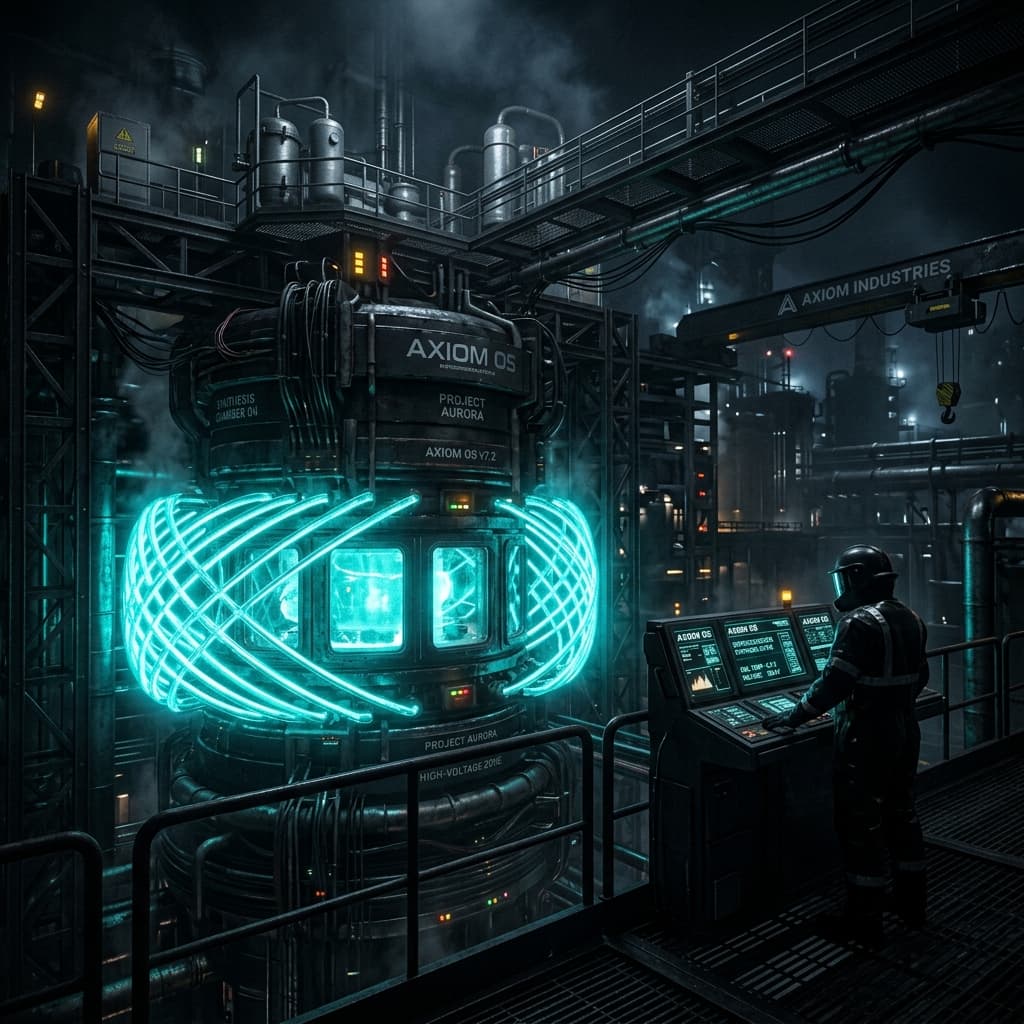
Terran Advanced Superconductive Materials
The TAS series is a family of high-temperature superconductive materials engineered to maintain superconductive behavior at practical operational temperatures. Unlike earlier generations requiring cryogenic operation, TAS materials achieve this through atomic-scale structural engineering and precision electron-pair stabilization — with no reliance on IM-9, exotic matter, or anomalous physics.
Physical Specs & Performance Characteristics
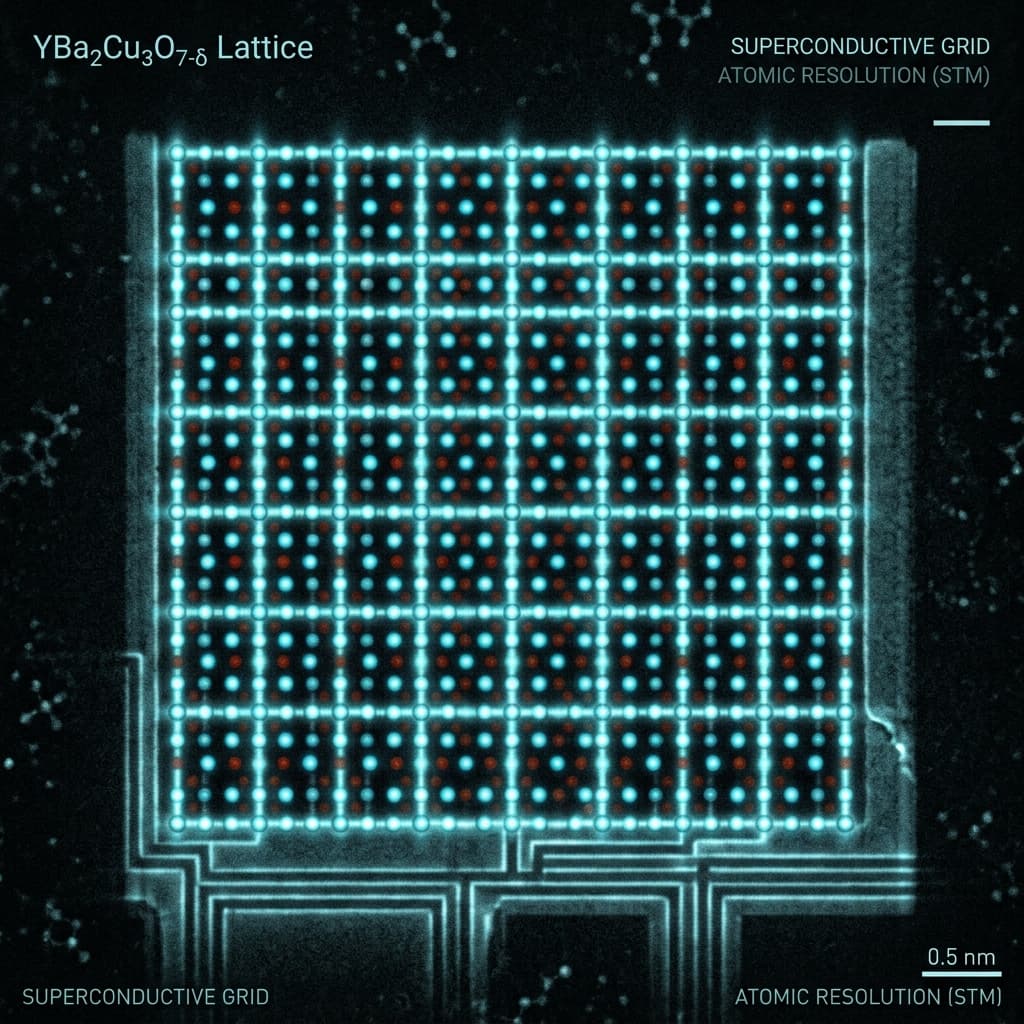
TAS-T — Transmission Superconductors
Optimized for efficient zero-loss electrical transmission across planetary and orbital infrastructure. Manufactured in flexible cable and ribbon forms for long-duration continuous-load operation. Moderate magnetic tolerance; lower field density capability. Long operational lifespan, high civilian scalability. Industrial designations include Helioline, Lineglass Ribbon, and TAS Transmission Ribbon.
Condensed Matter Stabilization Mechanisms
Stable paired-electron conduction states are maintained at temperatures and magnetic loads previously considered incompatible with practical superconductors. Achieved through engineered conductive pathways, atomic-scale structural precision, controlled vibrational energy behavior, and long-range phase coherence maintenance.
Heat-induced electron pair disruption is suppressed via vibrational energy redistribution, internal phonon dissipation structures, thermal spreading channels, and localized hot-spot suppression. This permits superconductive behavior at room temperature and above.
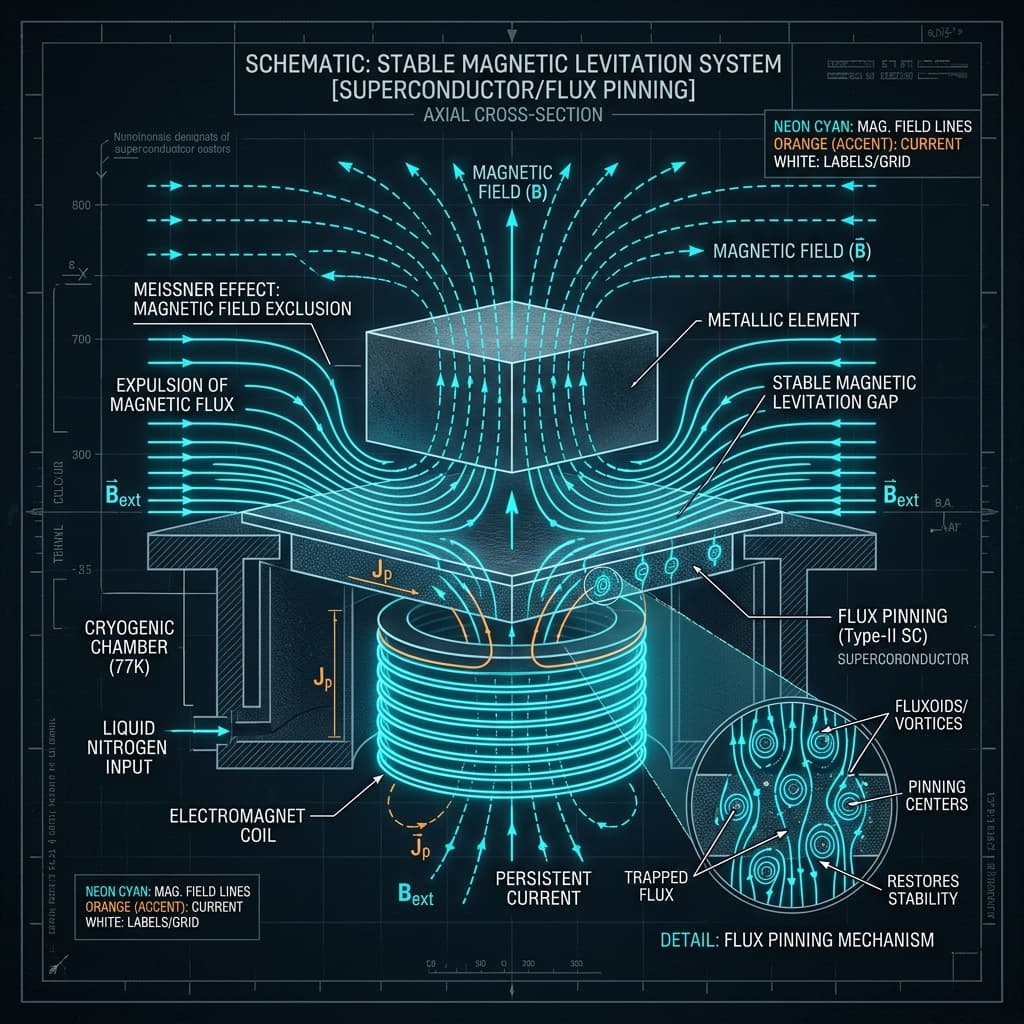
Superconductive TAS-F materials expel magnetic fields from their interior, forming stable exclusion surfaces that enable large-scale non-contact structural coupling, precision suspension, and dynamic magnetic geometry control.
Controlled magnetic flux trapping allows stable suspended structures, vibration damping, positional locking, large-scale magnetic stabilization, and partial field penetration management. Critical for heavy industrial and propulsion applications.
History & Research Milestones
The fundamental challenge of high-temperature superconductivity — maintaining electron pair stability without cryogenic infrastructure — defined the research horizon for Terran materials science across the Second Expansion Epoch. Early Terran superconductors required operational temperatures incompatible with large-scale deployment outside specialized laboratory or military installations.
The initial breakthrough enabling practical room-temperature superconductive behavior was achieved during the Late Second Expansion Epoch through collaborative programs coordinated between the UTC Materials Directorate, Helion Aperture Research Networks, and the Commonwealth Industrial Synthesis Authority.
Validation records are held under Commonwealth Materials Directorate archives. Specific incident records cross-referenced in Appendix C.
TAS materials entered broad deployment during the Late Second Expansion Epoch and have since become embedded in primary Terran infrastructure at planetary, orbital, and megastructure scales.
Primary & Secondary System Integration
- Zero-loss planetary and orbital power grid transmission (TAS-T)
- Magnetic suspension and field-coupled structural engineering for megastructures (TAS-F)
- Quantum computation and deep-space observation arrays (TAS-Q)
- HELIOS transmission and shipboard power routing systems
- Military propulsion, rail weapons, and armored field structures (TAS-X)
- Industrial maglev transportation infrastructure
- Precision astronomical sensors and research platforms
Civilization-Critical Assessment
TAS-X materials are directly weaponized in rail systems and tactical field structures. Degrading an adversary's TAS-T grid infrastructure constitutes a primary strategic objective in Commonwealth threat modeling. TAS-X shielding and field structures provide hardened protection for military assets. TAS-F field-coupled assemblies are integrated into armored platform positioning systems.
Manufacturing requires atomic-scale precision fabrication facilities (vapor deposition, plasma growth, vacuum structuring) with tolerances in angstroms. Development costs are classified across three institutional partners. Production costs are high, and the sector is regulated under Strategic Infrastructure Law as a tier-one strategic asset.
Access is governed by Commonwealth strategic infrastructure law. Transfer protocols with allied civilizations are classified, and export restrictions apply. Proliferation risk is limited by advanced atomic-scale manufacturing requirements.
Malfunction & Hazard Containment
Superconductive quench events in large TAS installations release accumulated magnetic energy rapidly. Uncontrolled quench propagation in high-field systems can result in structural failure of coupled assemblies, thermal venting events, and inertial destabilization of suspended components. Quench discharge in planetary-scale grid infrastructure carries cascading failure potential.
TAS operation relies on known condensed matter physics with no novel or anomalous mechanisms. No Kordahl review flag applies. TAS-X applications are subject to military use protocols, and civilian TAS infrastructure is governed under Commonwealth Strategic Infrastructure Law.
Quench events (localized or cascading) and manufacturing defects causing latent degradation under load represent key hazards. Standard large-installation protocols include segmented superconductive zones, rapid isolation gates, sacrificial discharge pathways, emergency field collapse systems, and thermal venting channels. Redundant stabilization prevents structural decoupling.
Technical Associations & Logs
Project Helios (HELIOS)
[TECH]TAS-T is the primary transmission medium for Helios energy output.
Warp Drive System
[TECH]TAS materials are required for warp nacelle field geometries.
Controlled Graviton Fields (CGFS)
[TECH]Co-deployed in megastructure magnetic suspension systems.
Interstitial Matter Type-9 (IM-9)
[TECH]TAS operates without anomalous IM-9 dependencies.