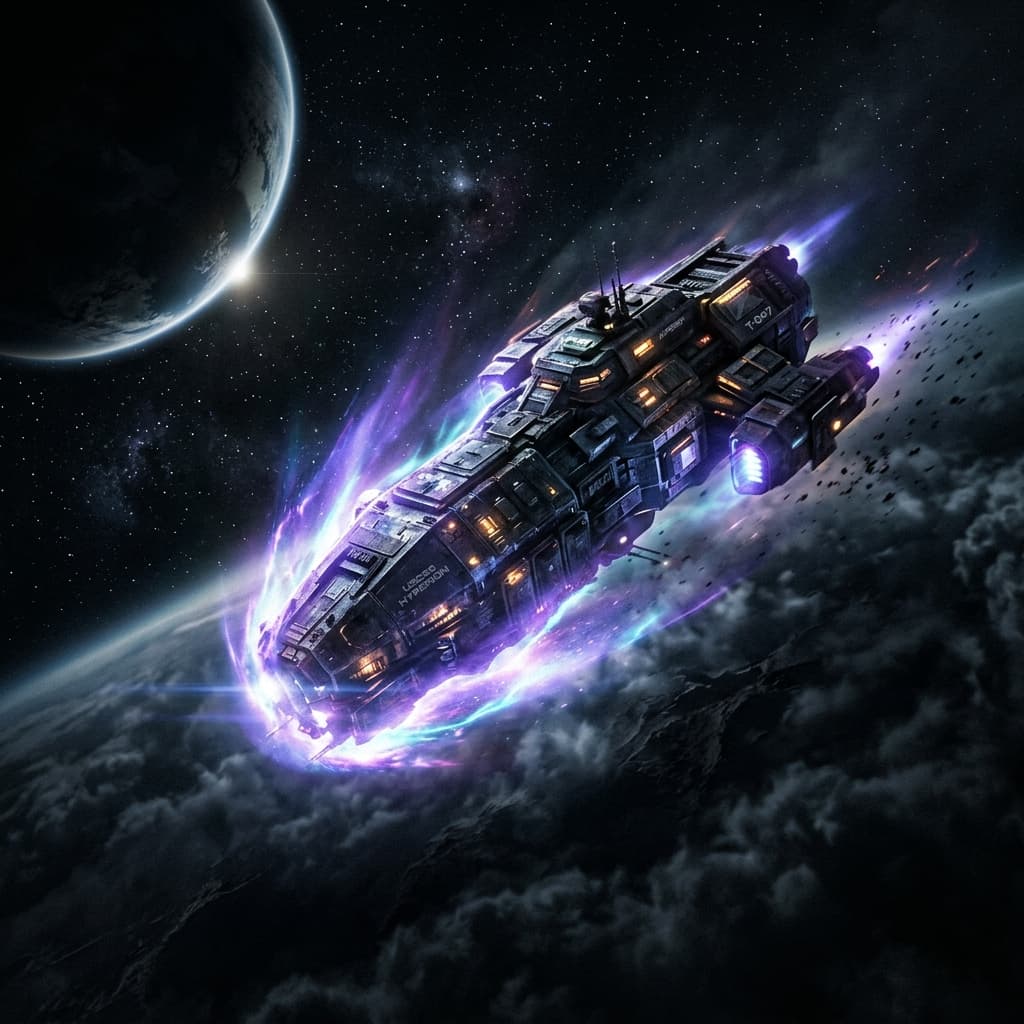
TERRAN SUBLIGHT DRIVE SYSTEMS
Foundational MMCT Research
Precursor atmospheric and magnetospheric systems (MAD/MGS) deployed for orbital yards, precision tugs, and aerostats.
Operational Certification
Graviton Shear Drive (GSD) and Inertial Vector Drive (IVD) certified for civilian transport and orbital-industrial hulls.
Tactical FTL Miniaturization
Micro-Warp Pulse Drive (MWP) enters service, derived from sub-FTL Alcubierre metric displacement research.
IM-9 Lattice Integration
Availability of Interstitial Matter Type-9 refines IVD and GSD, commencing third- and fourth-generation refits.
Metric Momentum Coupling
Terran field-coupled sublight drives provide non-rocket propulsion for in-system maneuvering, atmospheric transit, and interplanetary travel below 0.1c. All four drive families function in both vacuum and atmosphere without expelling reaction mass. Each exchanges momentum with spacetime fields or the local physical environment — gravitational, inertial, magnetic, or atmospheric — rather than with propellant.
This is the standard sublight propulsion ecosystem of the United Terran Commonwealth, administered jointly by the Commonwealth Field Propulsion Initiative (CFPI), Lunar Applied Metric Institute, Mars Orbital Shipworks Consortium, and Caelus Verge Aerostat Research Authority.
Metric Momentum Coupling Theory (MMCT)
All four Terran sublight drive families derive from a shared theoretical foundation: Metric Momentum Coupling Theory (MMCT), developed during the late 23rd and early 24th centuries CE. MMCT established that a vessel could exchange momentum with controlled gradients in spacetime, magnetic structure, gravitational fields, or environmental plasma without expelling reaction mass. Conservation laws are not violated; the reaction path runs through the ship-field-environment system rather than a visible exhaust stream.
MMCT development was not independent of warp research. The graviton field control and exotic matter handling methods refined for early Alcubierre metric experiments established much of the theoretical and engineering groundwork that made field-coupled sublight drives practical. The four drive families emerged as distinct branches from this shared research base.
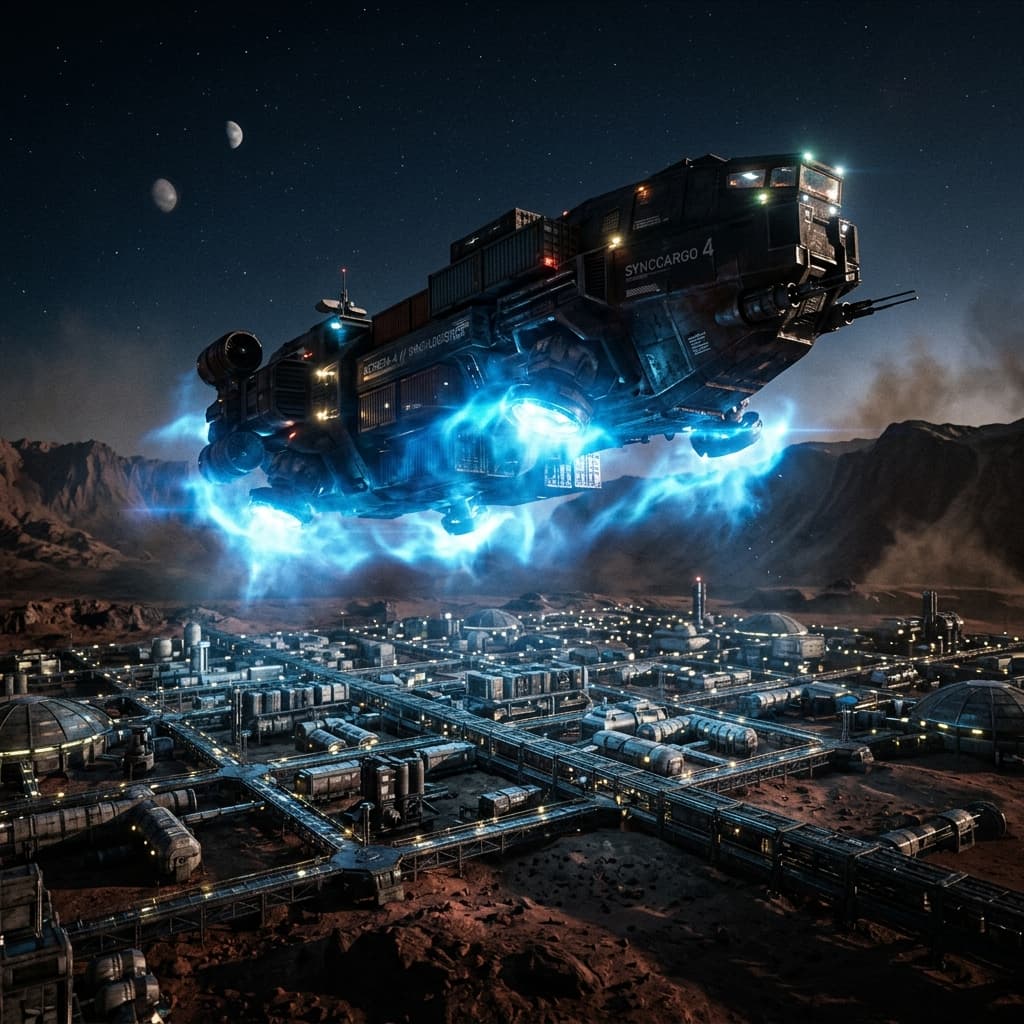
Drive Field Diagnostics
Each drive family applies MMCT to a distinct physical mechanism, optimized for different operational envelopes. The four families constitute the complete Terran sublight propulsion ecosystem.
Inertial Vector Drive (IVD)
Reshapes the hull metric so the chosen direction of travel becomes the path of least action. The vessel falls along its own engineered inertial gradient.
The IVD couples a compact IM-9 lattice to a driven graviton field, reshaping the ship's local metric so that the chosen direction of travel becomes the path of least action. The vessel falls along an engineered inertial gradient it carries with itself. Momentum exchanges with the surrounding gravitational field rather than with expelled propellant.
In atmosphere, the IVD reduces effective weight on demand, rendering lift primarily a bookkeeping exercise rather than an aerodynamic challenge. IVD-equipped craft behave as high-authority VTOLs without requiring wings; they can hover, strafe, and insert at arbitrary angles. Observable atmospheric signatures include a faint lensing shimmer and, at high throttle, a St. Elmo-like corona along the hull. In vacuum, the IVD is the Commonwealth's standard interplanetary drive — the most common mover on shuttles, warships, and small craft alike.
Constraints & Hazards: IVD systems draw high power and require maintained field hygiene near inhabited structures. Ships parked too close to habitats while running active IVD fields have caused documented inertial nausea events in nearby personnel. CPSA restricts aggressive weight-nulling over populated areas.Typical Platform Pairings: Shuttles (IVD primary, sometimes MWP secondary); warships (IVD + GSD standard, with optional MWP modules); small craft and strike fighters (IVD + MWP).
The GSD uses phased graviton emitters distributed around the hull to generate a forward gravitational well and an aft gravitational shear — a controlled spacetime slope the vessel rides. Like the IVD, momentum exchanges with the ambient gravitational field rather than propellant; unlike the IVD, the mechanism operates by building external curvature rather than modulating internal inertia.
In atmosphere, GSD produces near-zero downwash and minimal acoustic or electromagnetic disturbance, making it the preferred drive for civilian ports, habitat approaches, and environmentally sensitive arrivals. Its atmospheric signatures — flickering mirage bands and intermittent compass perturbation — are lower-profile than IVD at equivalent thrust levels. In vacuum, GSD excels at sustained low-to-moderate acceleration burns over extended periods. It is notably power-efficient at the lower end of its performance envelope, which makes it the standard cruise drive for passenger liners and capital ships on interplanetary legs.
Constraints & Hazards: GSD is less responsive than IVD for rapid vector changes. Abrupt course corrections cause the graviton field to resonate — colloquially, the field "rings like a bell" — producing a distinct gravimetric shear signature that is detectable by standard passive sensors. This makes GSD-primary vessels easier to track during aggressive maneuvering.Typical Platform Pairings: Passenger liners (GSD primary, IVD secondary); capital warships (IVD + GSD standard); industrial platforms (GSD acceptable as backup).
The MWP advances the ship's worldline through a rapid chain of ultra-short sub-FTL warp microbubbles — each displacing the vessel by millimeters to meters per pulse. The pulse train produces net continuous thrust without exhaust. Each displacement event is a miniaturized application of Alcubierre-type metric manipulation operating well below FTL thresholds; conservation is maintained across the complete pulse sequence. MWP architecture derives directly from the Alcubierre Metric Displacement System but produces no warp envelope and operates exclusively in the sublight regime.
In vacuum, MWP is the most tactically agile Terran sublight drive available. It excels at rapid vectoring, close-quarters docking, evasive maneuvering, and burst acceleration sequences where direction changes must be sharp and immediate. Strike fighters rely on MWP for dogfighting and jinking.
Constraints & Hazards: MWP leaves trackable warp-wake residue in its operational corridor, complicating tactical stealth. Unrestricted use near fragile infrastructure, delicate ecosystems, and precision installations is prohibited under CPSA statute due to micro-tidal spiking. Atmospheric use is possible but highly regulated; high-frequency pulse sequences ionize air in the drive's immediate vicinity, and CPSA enforces pulse-quiet zones.Typical Platform Pairings: Strike fighters and interceptors (IVD + MWP standard); capital warships (MWP modules fitted but not primary); large civilian hulls (generally excluded).
MAD/MGS is a single hardware family operating in two modes depending on the local environment. Where IVD, GSD, and MWP all reshape or pulse spacetime fields the ship carries with itself, MAD/MGS couples to the physical environment directly — atmospheric structure, magnetic fields, and nearby gravitational sources. It is the drive used when there is something substantial in the local environment to couple to.
MAD (Atmospheric Mode): The MAD system projects a controlled plasma sheath around the hull and uses Lorentz-force interactions to manage atmospheric drag, generate lift, and produce directed thrust without combustion or mechanical surfaces. In atmosphere, it is extremely quiet — no exhaust, no significant acoustic signature, minimal electromagnetic output. This makes MAD the preferred system for covert atmospheric insertions, operations near delicate ecosystems, and low-profile arrivals. The system also functions in underwater transit, where drag suppression allows a vessel to move through liquid environments without conventional hydrodynamics.MGS (Magnetospheric and Structural Mode): In space, the same hardware couples to magnetic field structures — planetary magnetospheres, stellar magnetospheres, and the field geometries produced by large Dyson infrastructure. MGS provides precise station-keeping at micro-g to low milli-g correction levels, sustained over long durations with very low power consumption relative to thrust output.
Constraints & Hazards: MAD/MGS is operationally dependent on the local environment. Where IVD and GSD function effectively anywhere in space, MAD/MGS requires meaningful atmospheric, magnetic, or gravitational structure to couple against. In open deep space, far from any field source, the system contributes little.Typical Platform Pairings: Orbital construction and industrial platforms (MAD/MGS primary; IVD or GSD backup); ecological survey and scientific craft (MAD/MGS primary); atmospheric lifters (MAD primary); stealth insertion craft (MAD primary with IVD secondary).
Structural & Crew Protection
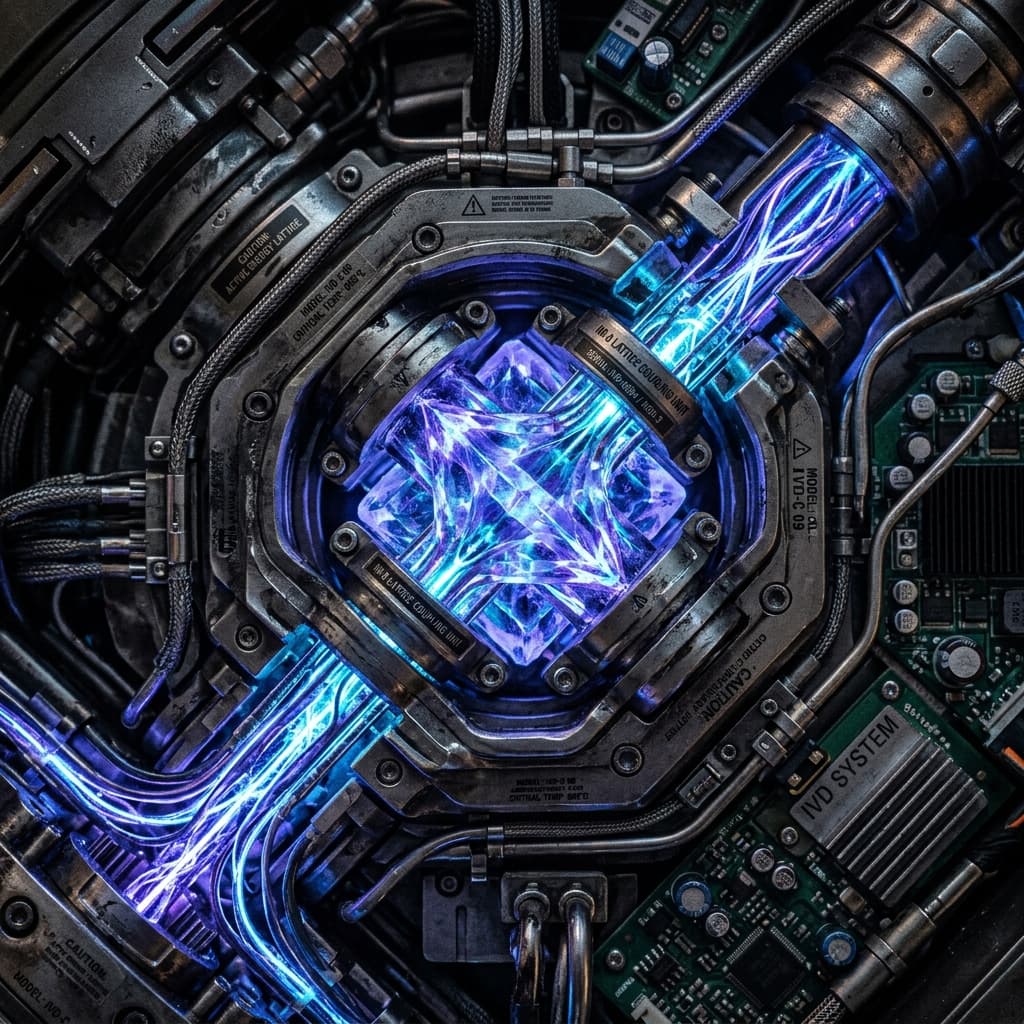
High-performance sublight operation requires active inertial compensation to protect crew and hull. Two integrated systems handle this function aboard Commonwealth vessels:
Inertial Compensation Lattice (ICL): Crew and passenger protection. The ICL counters g-force loading on biological occupants, allowing sustained acceleration profiles that would otherwise cause injury or death. ICL bandwidth — the maximum rate of change it can actively compensate — is a real constraint on practical operational speed, particularly during rapid vectoring in IVD and MWP maneuvers.Structural Inertial Stabilization Grid (SISG): Hull, cargo, and machinery protection. The SISG manages structural stress during acceleration and vector changes, preventing frame damage and protecting sensitive equipment. Long structural members, delicate scientific instruments, and cargo with differential mass distribution all place specific demands on SISG tuning.
In practice, Terran sublight drive output is not the primary limit on fast in-system travel. ICL bandwidth, SISG structural ratings, thermal loading, navigation safety margins, and traffic control doctrine set the effective ceiling on operational speed for a given platform. The theoretical performance envelope of the drive itself is generally wider than what the ship as a system can practically sustain.
Speed Envelopes & Authority
Terran sublight drives are designed for in-system maneuvering and interplanetary transit. Standard Commonwealth operating practice remains below 0.1c — approximately 30,000 km/s — where relativistic time dilation is physically present but operationally negligible for transit planning purposes. At these speeds, a traveler accumulates approximately 0.5% less elapsed time than a stationary observer over a given journey; this discrepancy falls below the threshold treated as operationally significant in Commonwealth navigation doctrine.
Speeds above 0.1c are possible under exceptional circumstances but fall outside routine civilian or military transit doctrine. Sustained high-fraction-c sublight travel introduces relativistic time dilation effects that require explicit mission planning consideration and are not standard operational practice. Interstellar transit is handled by warp drive; see WarpDrive_TECH_AXIOM_001 for FTL propulsion doctrine and operational parameters.
Reference travel profiles (standard acceleration, flip-decelerate profile): Most interplanetary transits use a coasting profile: drives accelerate the vessel to cruising velocity, then throttle to minimum or standby power while the ship coasts under inertia, with drives re-engaging only for course corrections and the deceleration burn at the destination. GSD is particularly well-suited to coasting profiles given its efficiency at low throttle.
Destination | At 0.2 g | At 0.5 g |
|---|---|---|
| Earth to Luna | ~5–6 hours | ~3–4 hours |
| Earth to Mars | ~2–3 weeks | ~1+ weeks |
| Earth to Europa | ~few months | ~6 weeks |
Drive Deployment Authorization: Civilian drive operation is licensed by the Commonwealth Propulsion Safety Authority (CPSA). Military restricted ratings and tactical propulsion data are controlled at AXIOM-3 / Classified clearance.CPSA Regulations: The CPSA licenses civilian field drives, enforces urban approach limits, maintains pulse-quiet zones, investigates field-shear incidents, certifies inertial compensation alignment, and regulates drive use near habitats, biospheres, and megastructures. AXIOM handles restricted research, military exceptions, exotic-field hazard review, and incidents involving IM-9 systems, warp-derived components, or graviton instability.Personnel Requirements: Standard civilian sublight drive operation requires CPSA certification for the relevant drive family. IVD and GSD certification is broadly available through Commonwealth transit academies. MWP certification requires additional training due to wake management and infrastructure hazard protocols. MAD/MGS atmospheric and underwater certification includes environment-specific coursework not required for vacuum-only operators. Military burst envelope operation requires MBRA or acceleration gel protocols.
Hazard Containment & Codes
Physical Risks: IVD field proximity to habitats can cause inertial nausea in unprotected personnel; certification requires demonstrated field hygiene compliance. MWP pulse residue creates measurable micro-tidal effects in the surrounding metric; restricted zones near precision installations exist for this reason. GSD abrupt vectoring produces gravimetric shear detectable at range but poses no direct hazard to personnel under normal operation. MAD/MGS systems present minimal hazard in standard operation.Environmental Risks: MWP pulse sequences ionize atmospheric gas in the drive corridor; environmental impact in pulse-quiet zones is the basis for CPSA restriction. MAD atmospheric mode interacts with local ecologies less disruptively than any other drive family, and is the recommended system near protected biospheres.Ethical Considerations: Navigation fairness legislation governing IVD use over populated areas arose from documented cases of inertial disruption affecting residents below active drive corridors. The legal framework is primarily civil rather than ethical in classification; compliance is enforced through CPSA licensing rather than AXIOM oversight. Terran field-coupled sublight drives do not meet Threshold Science thresholds. No Kordahl-principle review is active on these systems.
Fourth-generation IVD systems incorporate IM-9 lattice refinements that substantially improve sustained-thrust efficiency. GSD development is focused on reducing the gravimetric shear signature produced during course corrections, a persistent tactical liability. MWP engineering programs are exploring pulse-cadence improvements that reduce wake residue without sacrificing tactical responsiveness. MAD/MGS research is ongoing in extended underwater operating ranges and improved coupling efficiency in field-sparse environments.
No Terran sublight drive program is pursuing relativistic operating regimes. Sustained high-fraction-c travel remains outside doctrine.
Associations & History
Interstitial Matter Type-9 (IM-9)
[TECH]IVD relies directly on compact IM-9 lattice coupling as its inertial coupling core.
Alcubierre Warp Drive System
[TECH]MWP architecture derives from warp metric displacement research.
Controlled Graviton Fields (CGFS)
[TECH]Co-developed in megastructure magnetic suspension systems.