WFCN
WARP-FILAMENT COMMUNICATIONS NETWORK
United Terran Commonwealth
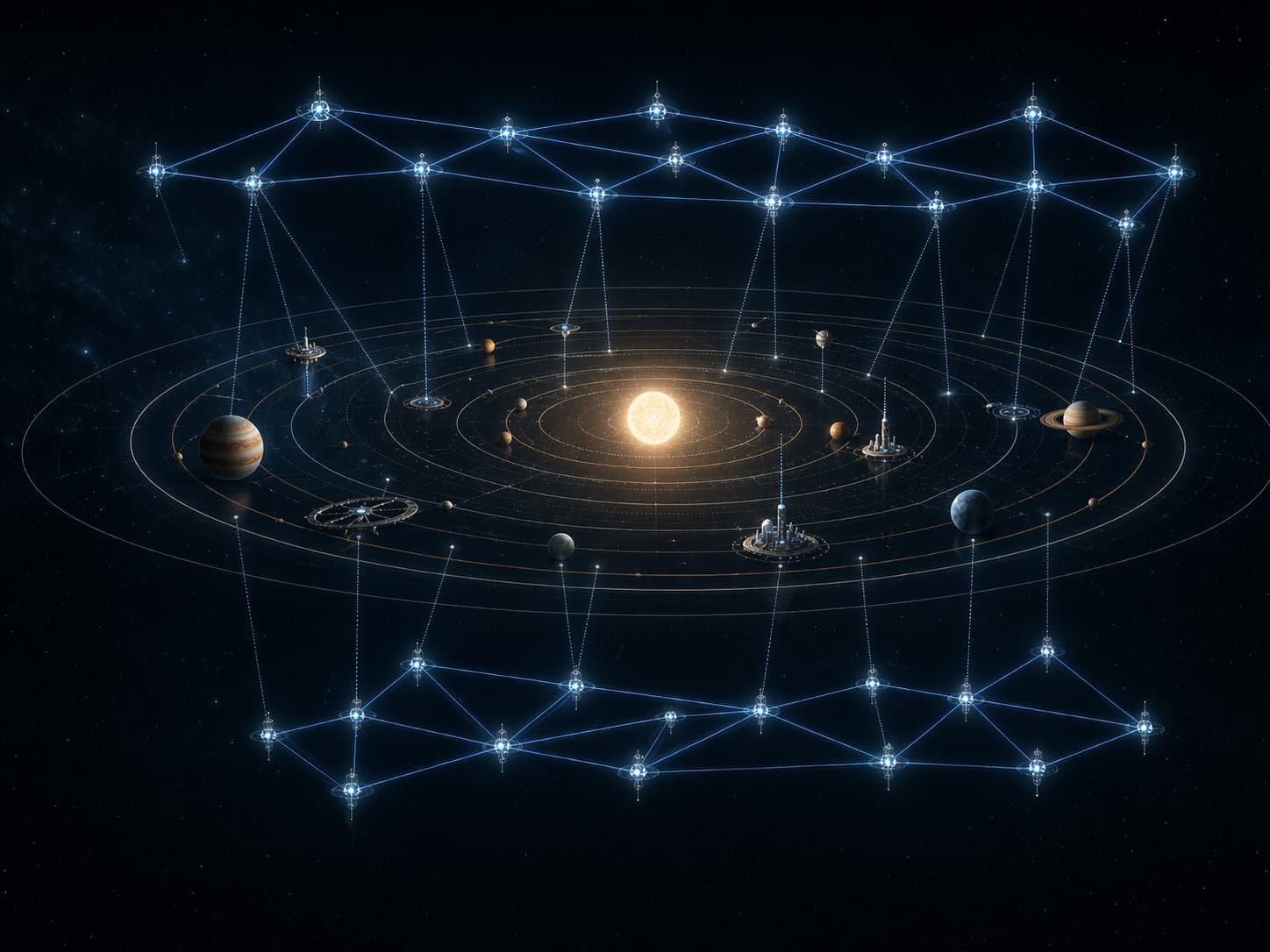
The Warp-Filament Communications Network (WFCN) is the primary interstellar information infrastructure of the United Terran Commonwealth and allied systems. It enables interactive, light-year–scale communication without the use of subspace or violations of relativistic causality.
The WFCN operates by projecting and maintaining narrow, massless spacetime geometries — “warp filaments” — between fixed relay nodes. These filaments reduce the effective distance between endpoints, allowing electromagnetic signals to traverse interstellar separations with warp-equivalent latency while remaining locally subluminal.
The system evolved conservatively from courier-based communication over six centuries. It is designed for clean failure, extreme redundancy, and strict separation from FTL vessel traffic. Communication routinely outruns physical travel, but never precedes transmission. Causality is preserved by design.
Warp filaments are standing spacetime geometries. They are not signal beams and do not transport mass. Within a filament, electromagnetic propagation remains ≤ c locally. The filament does not move the signal faster than light — it shortens the path the signal must travel.
The distinction is not semantic. It is the reason the WFCN cannot be used to send signals backward in time, and why it has operated for three centuries without a single verified causality incident.
Effective propagation rate comparable to warp travel constraints
Causality preservation enforced by physical architecture, not policy
Millimeter-scale filaments vs. meter-scale ship drives
Clean collapse, automatic rerouting, extreme redundancy
Warp filaments are maintained at millimeter cross-section — far smaller than any ship warp envelope. This scale constraint is not a limitation but a design advantage. Dr. Marcus Okonkwo's foundational 2646 CE proof established that millimeter-scale filaments can be maintained indefinitely with minimal IM-9, while wider geometries require exponentially more exotic matter and are fundamentally unstable. The WFCN is built on and around this insight.
In high-traffic systems, the WFCN occupies vertical strata above and below the orbital plane. Local traffic uplinks via conventional electromagnetic channels; interstellar distribution occurs exclusively off-plane. This vertical stratification separates local EM uplink traffic from interstellar filaments, reduces interference and collision risks, and became the architectural standard for new installations after the 2835 CE mandate.
Dual-layer lattices are common in core systems for redundancy. The topology is hierarchical — backbone nodes with 16–32 connections each serve as hubs for mid-tier autonomous relays, which feed peripheral nodes at the frontier. Sol System maintains 120+ outbound filaments as the network's primary hub.
Filaments are affected by plasma density, radiation storms, gravitational shear, and stellar activity. The WFCN responds through throttling, rerouting, or preemptive collapse rather than resisting instability. Space weather causes degradation, not catastrophic failure. This is intentional — the network yields to physics and reroutes rather than holding geometries that would become unstable or energetically hazardous.
Filament stability margin
Node scheduling and contention
Error correction overhead
Thermal rejection limits
Filament Factor is a logarithmic shorthand for effective distance compression:
This expresses warp-equivalent propagation rate without implying local superluminal motion. Communication intentionally outruns physical travel while remaining causality-safe.
The WFCN relay lattice is built from three node classes, each with distinct operational roles, staffing levels, and filament connectivity counts. All nodes share standardized protocols established by the Commonwealth Communications Standards Board in 2682 CE. Node designs are modular for easier upgrades.
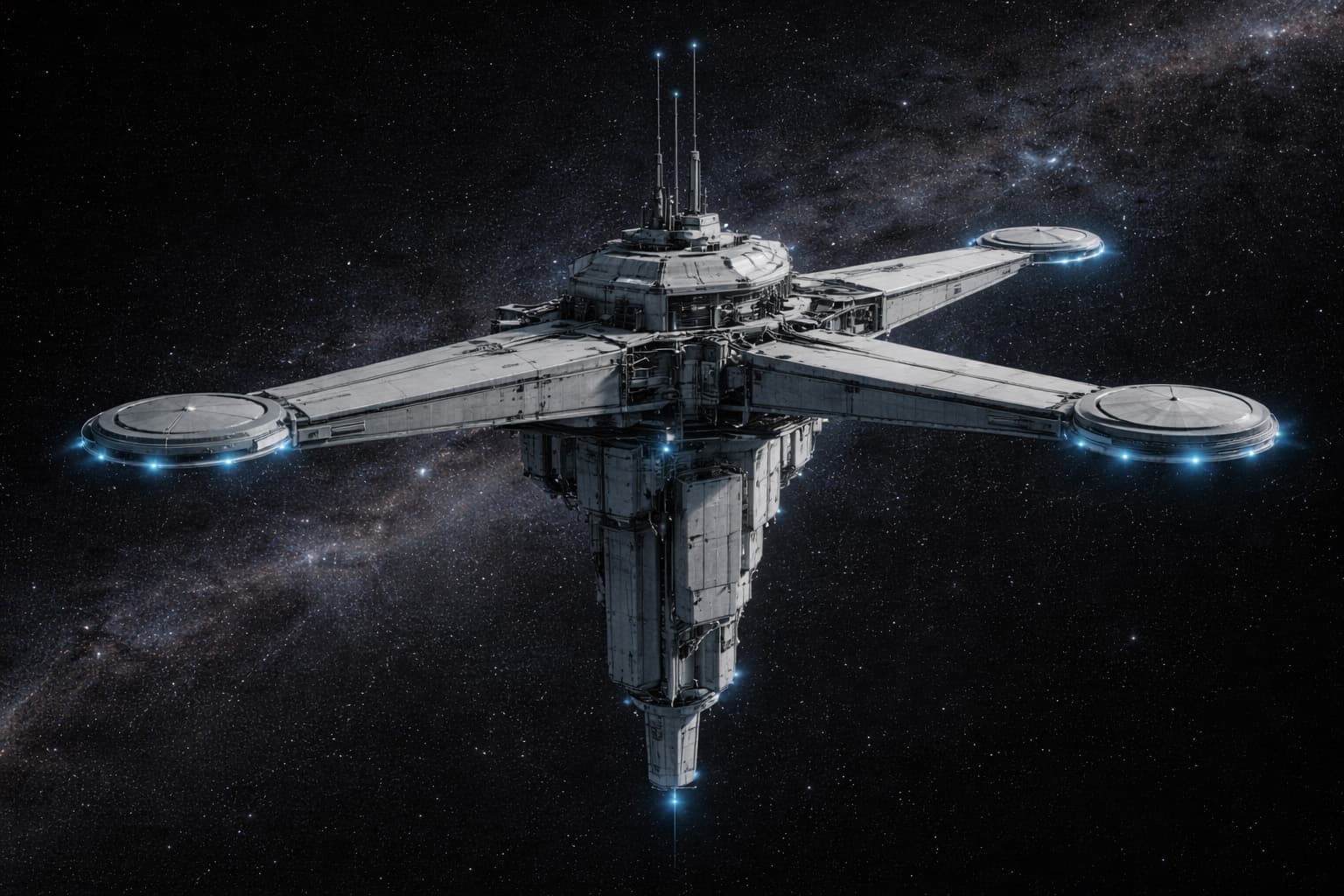
Primary hubs of the network. Sol maintains 120+ outbound filaments. Handle traffic arbitration, filament stabilization, and bandwidth enforcement across the backbone.
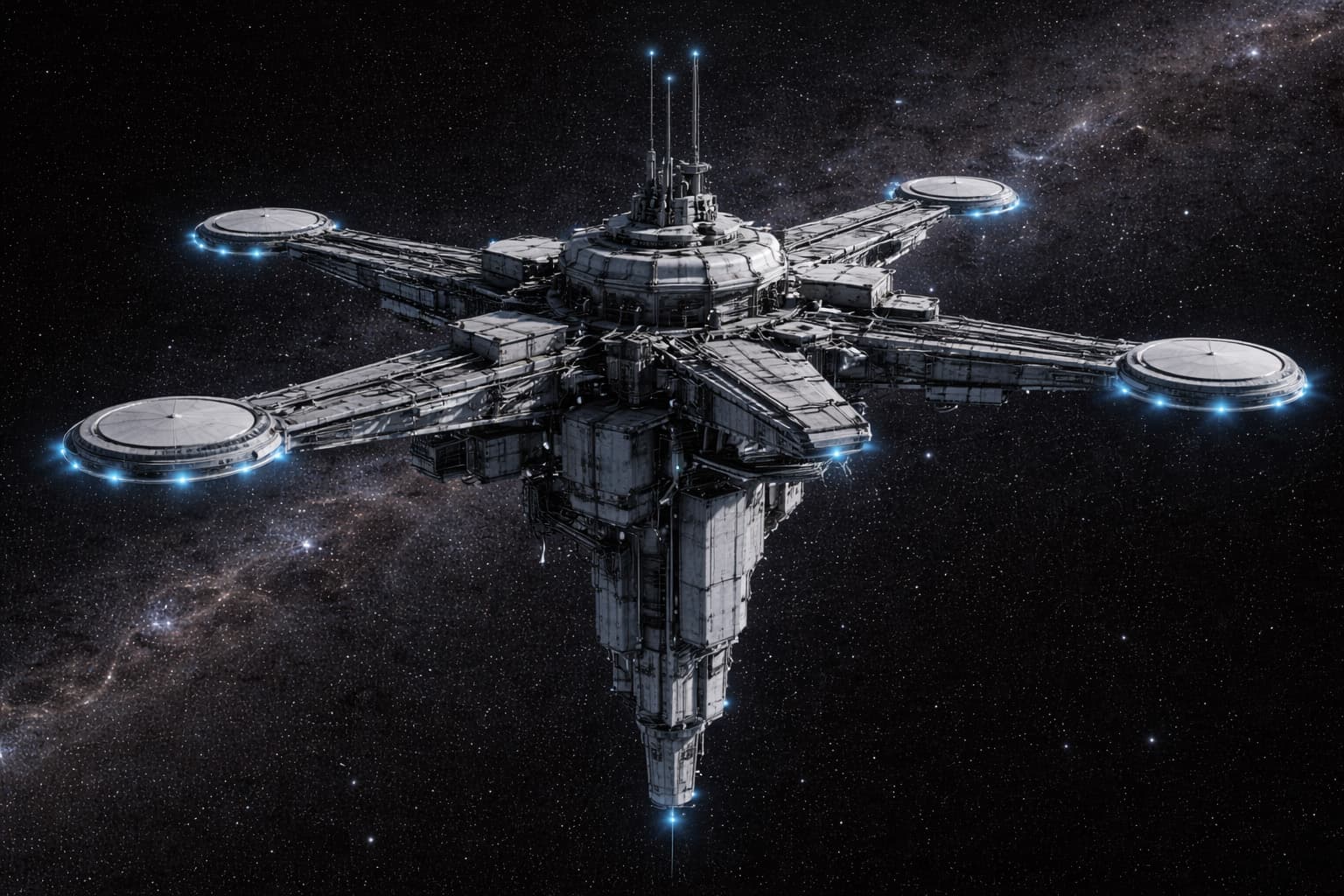
Connects high-grade trunk routes at the backbone tier. Manages bandwidth arbitration between major system-to-system corridors. Critical strategic infrastructure.
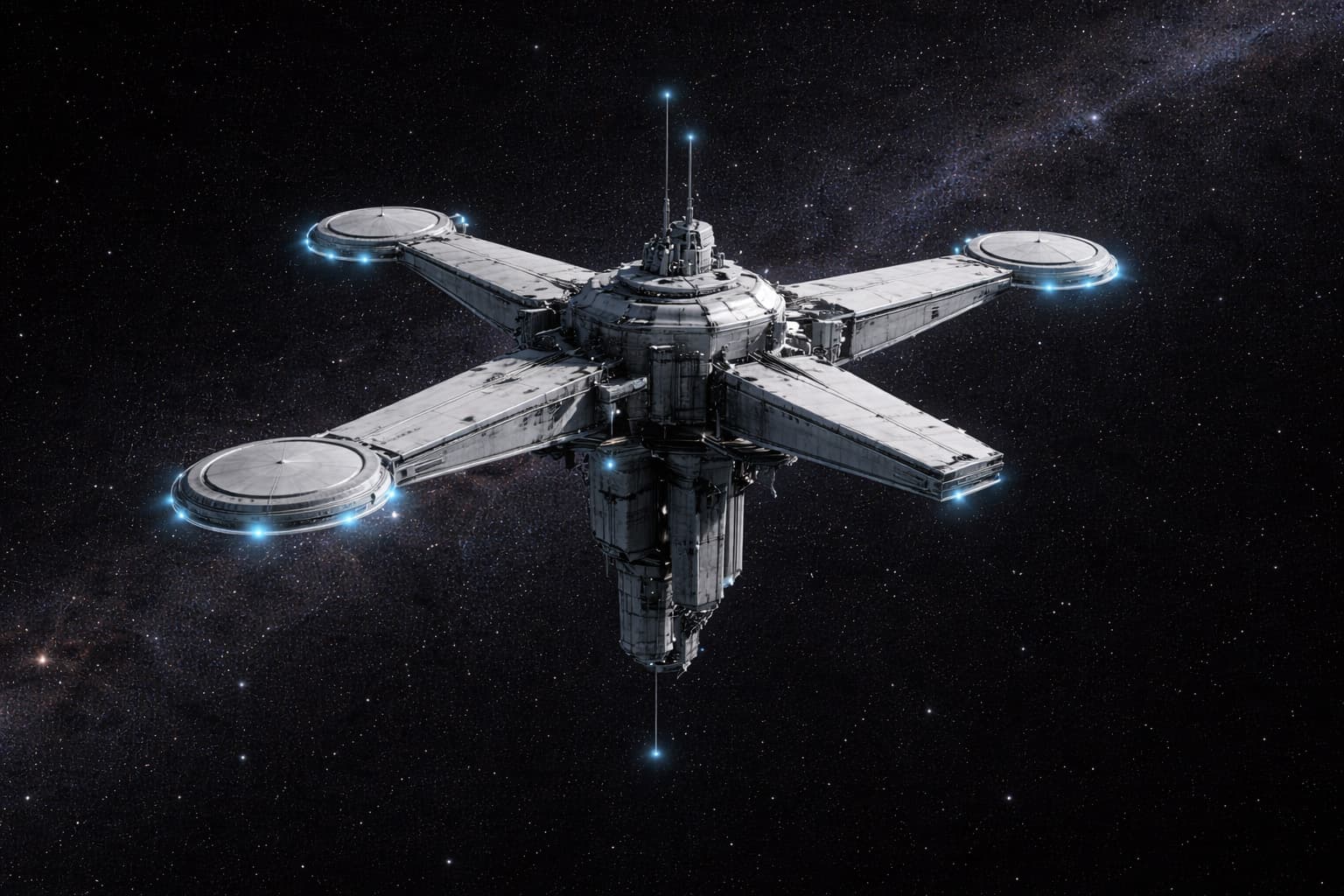
The backbone of the hop-based lattice. Receive, buffer, verify, and retransmit signals. Each node is a discrete causality-safe handoff point in the relay chain.
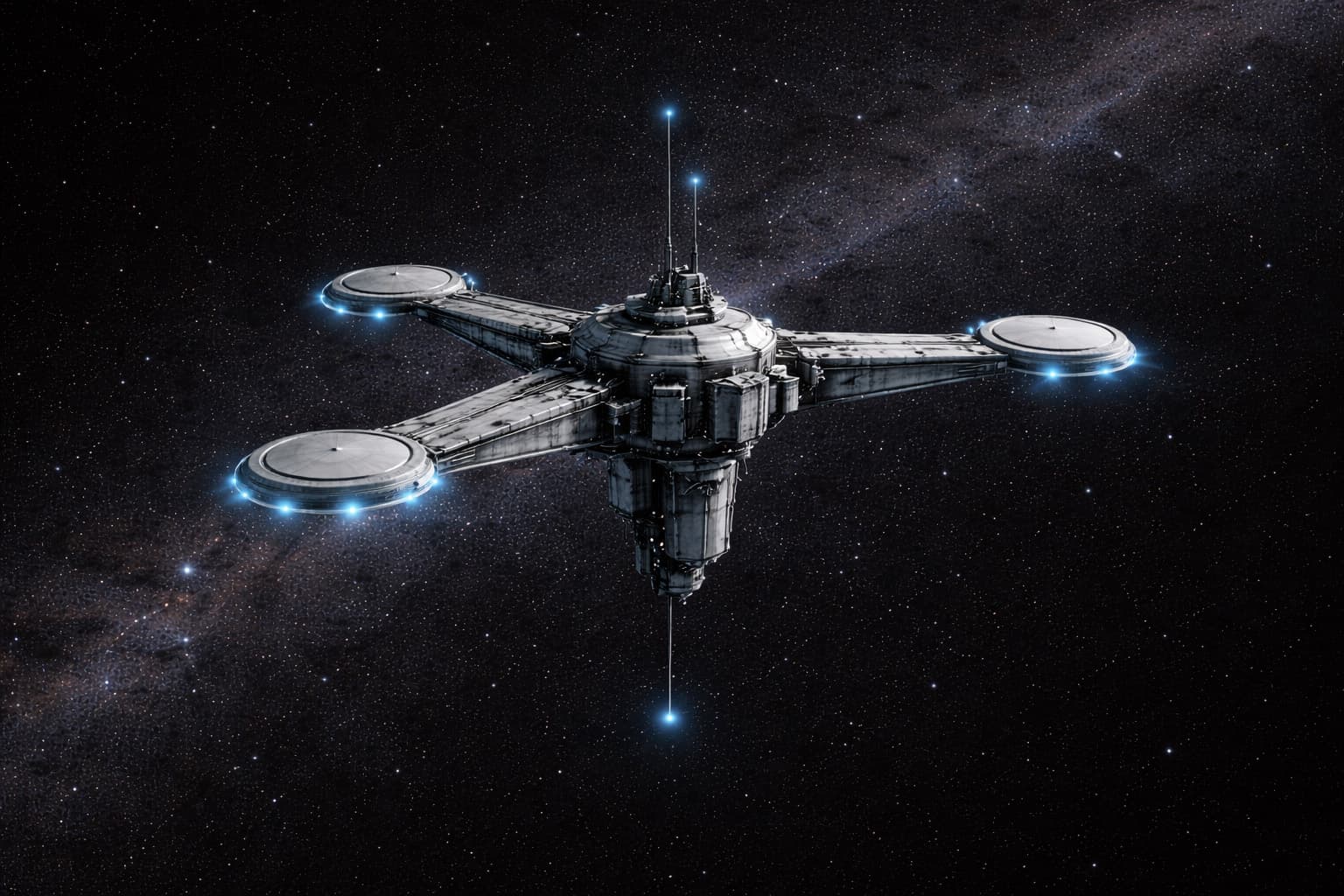
Fully autonomous frontier deployments. Self-diagnostic and self-repair capabilities. 60% reduction in operational costs vs. crewed nodes when introduced in 2687 CE.
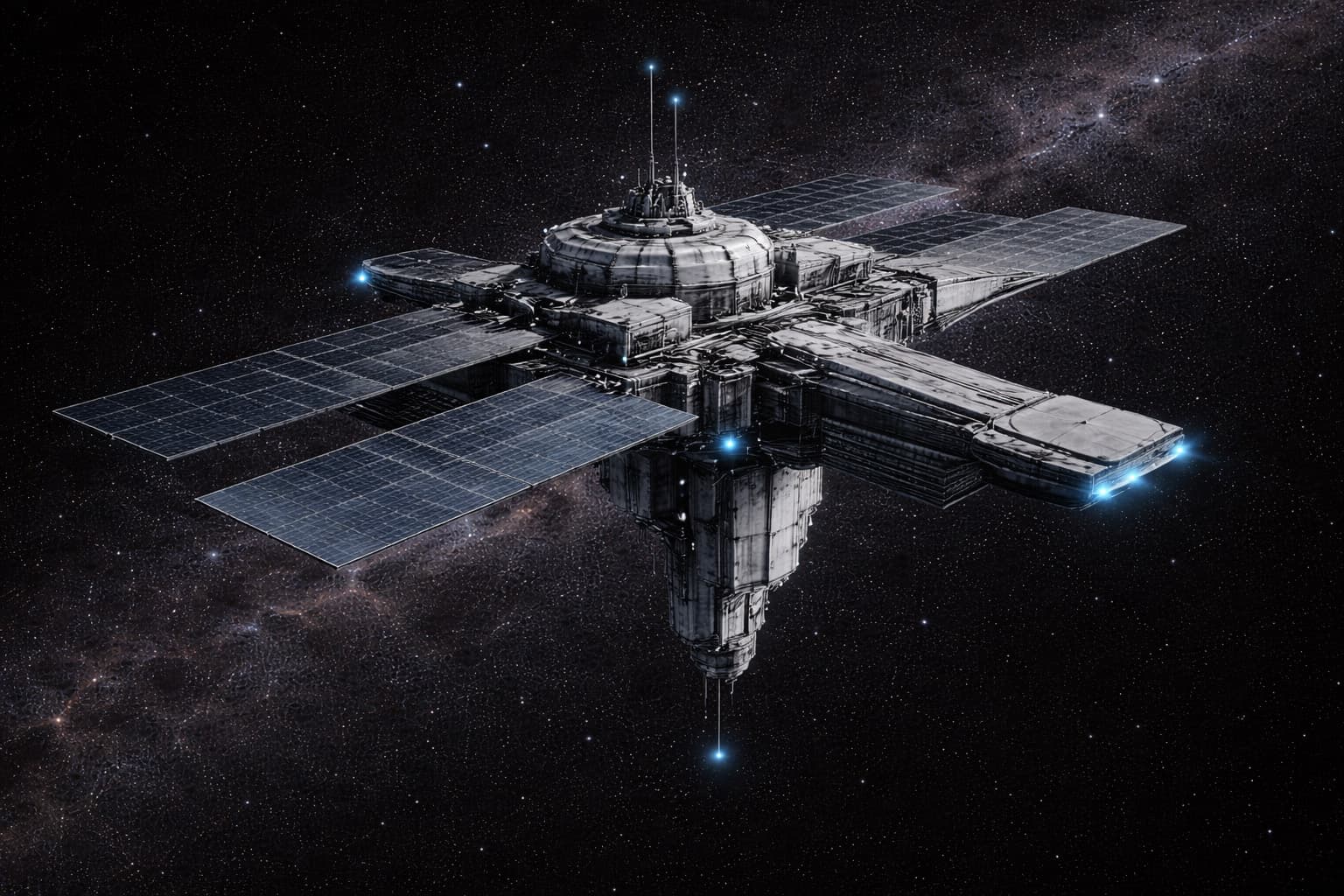
Interfaces the network with stellar power infrastructure. The 2870 CE HELIOS integration at Solara-VI provided unprecedented filament density in connected systems — backbone bandwidth to core systems increased 5x.
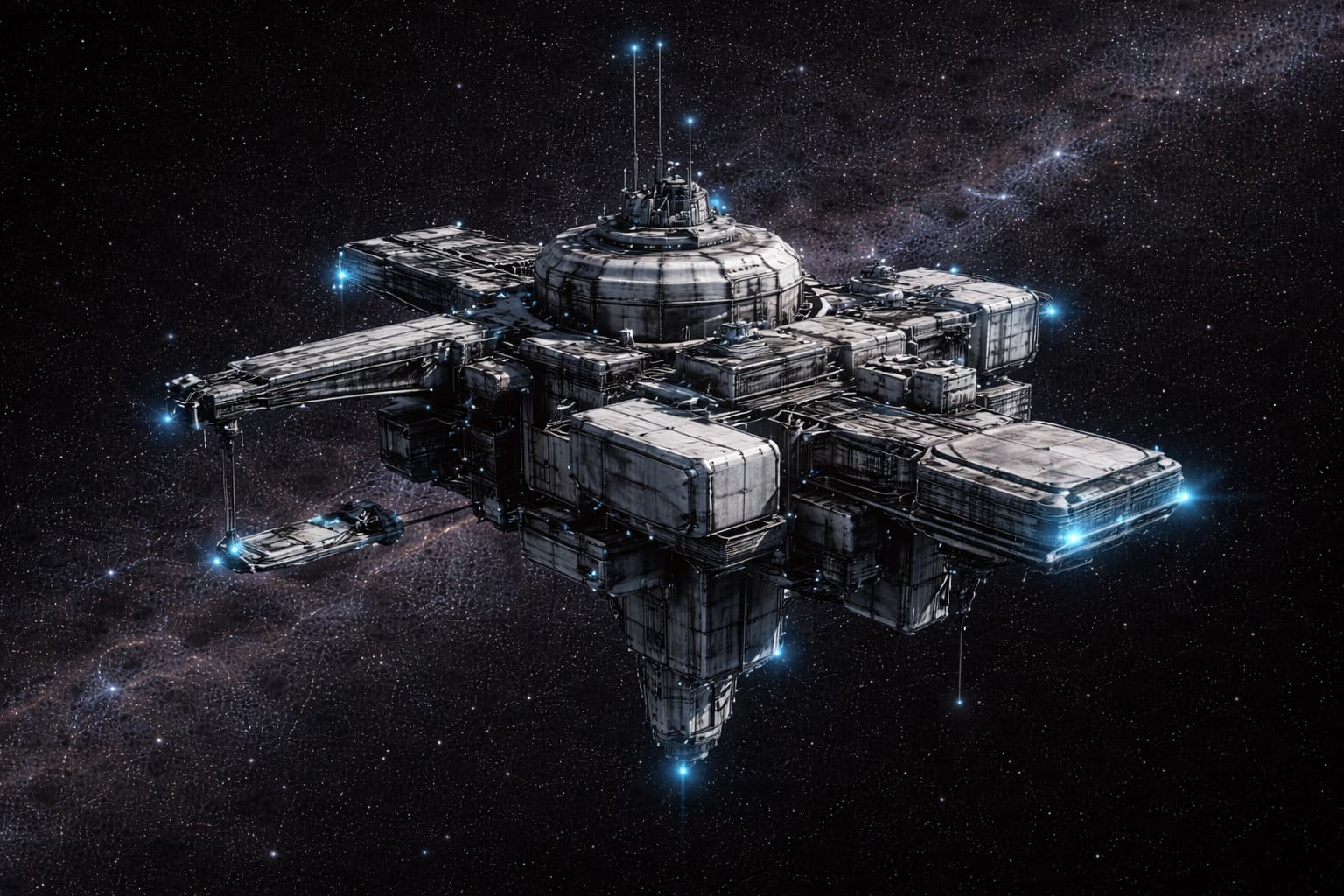
Crewed stations providing maintenance coverage for node clusters. Handle filament geometry recalibration, IM-9 replenishment, and physical component replacement on the ~30,000 kg/year maintenance cycle.
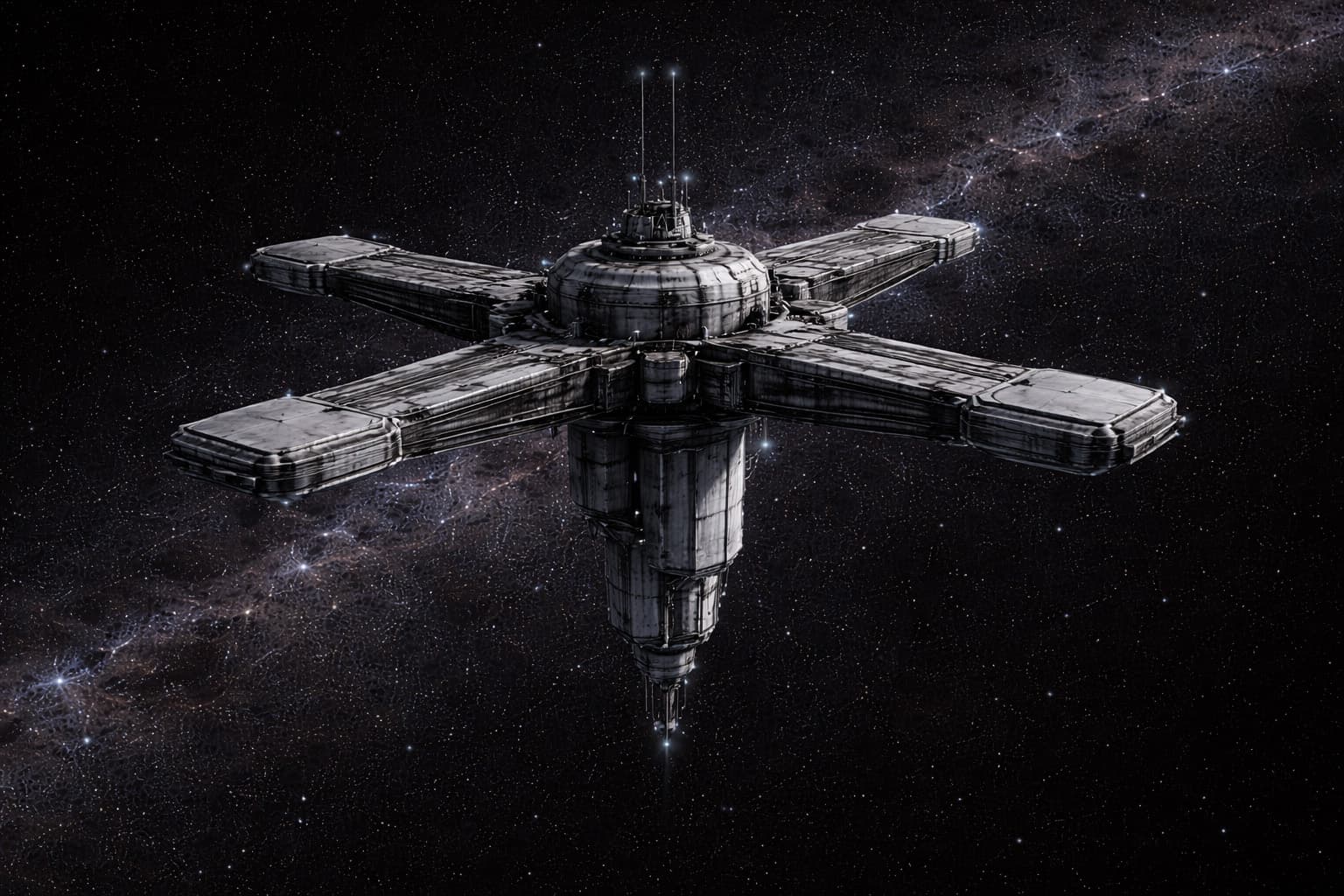
Pre-positioned reserve nodes that activate automatically during filament collapse or trunk route failure. Core component of the graceful degradation architecture that maintains 98.5% uptime.
The WFCN reflects six centuries of conservative engineering rather than a single breakthrough. It evolved through eight major phases, each driven by a specific operational failure or scientific advance.
Geometry standards enforcement
Corridor exclusion volumes
Authentication and key protocols
Inspection and shutdown authority
Bandwidth tier enforcement
Filament corridors are strict no-transit volumes
Ship warp envelopes cannot merge with filaments
Space weather causes throttling and rerouting, not catastrophic failure
Courier vessels remain in use for seeding, fallback, and off-lattice regions
Quantum entanglement is used solely for authentication, integrity verification, and keying material. It does not transport information or provide instantaneous acknowledgments.
The distinction between the WFCN's entanglement use and any hypothetical FTL communication via entanglement is fundamental. Entanglement cannot transmit information. It is used here to establish that a message originated from an authenticated node — the information itself still travels hop-by-hop through the filament lattice.
The WFCN is second only to IM-9 siphons in strategic value to the United Terran Commonwealth. Loss of backbone nodes would fragment the Commonwealth; military command and control is completely dependent on network availability; economic coordination across hundreds of light-years is impossible without WFCN. The network is heavily defended, monitored, and treated as critical infrastructure under UTC law.